Guide to Bitumen Roof Sheets - Are They Really Any Good?
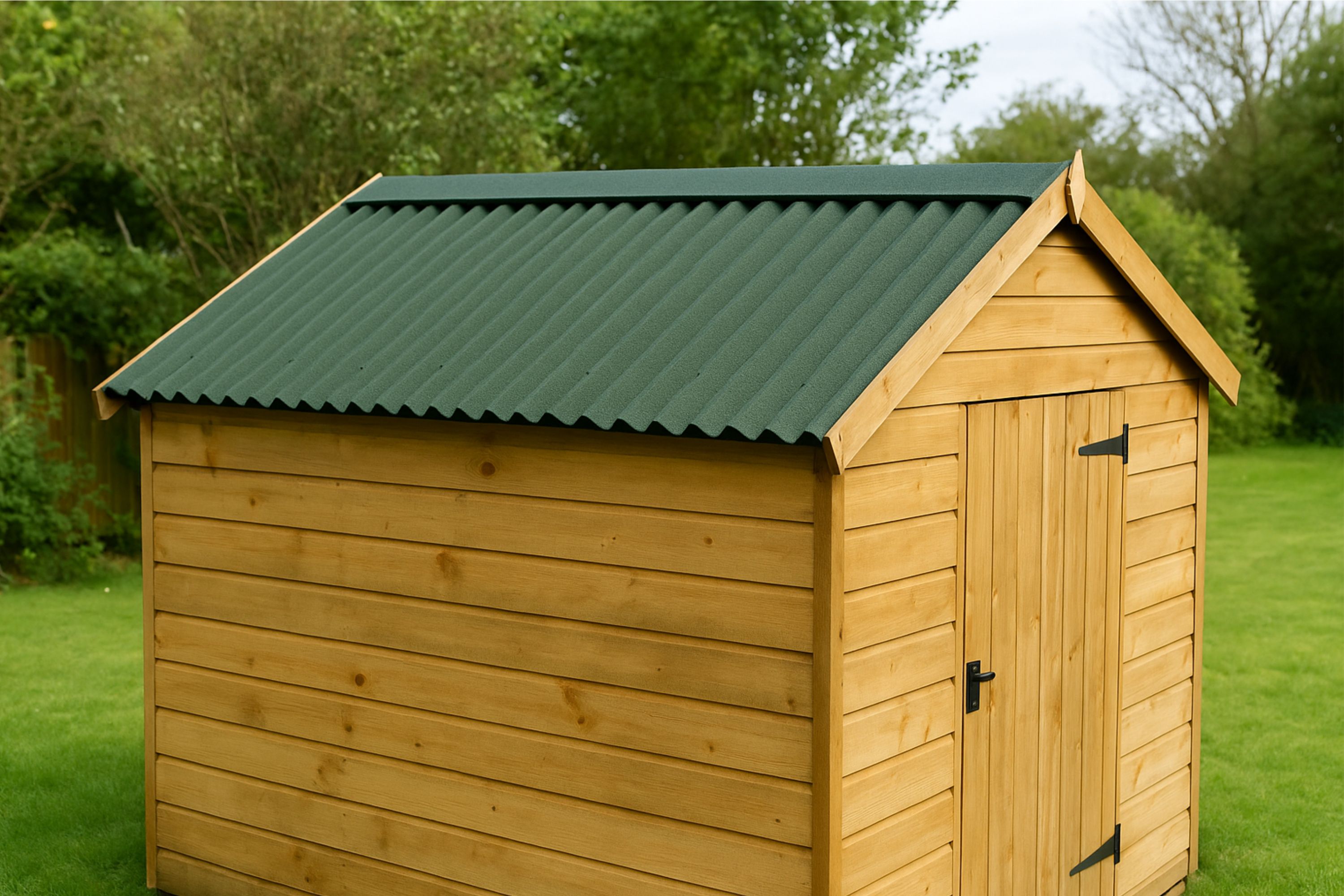
Bitumen roof sheets are one of the most popular ways to cover sheds and small outbuildings. But people often wonder if they're genuinely any good - after all, they're pretty affordable (i.e cheapish compared to some other roofing materials). So will they last or will you be replacing them every 5 minutes?
For the right type of roof, bitumen sheets will do a great job. They’re waterproof, simple to install and much more durable than their low cost might suggest (many come with guarantees up to 15 years). But like any material, they have their limits - and they’re not the best fit for every job.
Read on to understand why bitumen sheets are so commonly used, see how they stack up against other popular materials (especially for sheds) and decide if they’re the right call for your project.
In this article:
Bitumen sheets are lightweight roofing panels made from a fibre core soaked in waterproof bitumen - the same material used in road surfacing. But don’t let that throw you - these are designed specifically for small roofs, not tarmac!
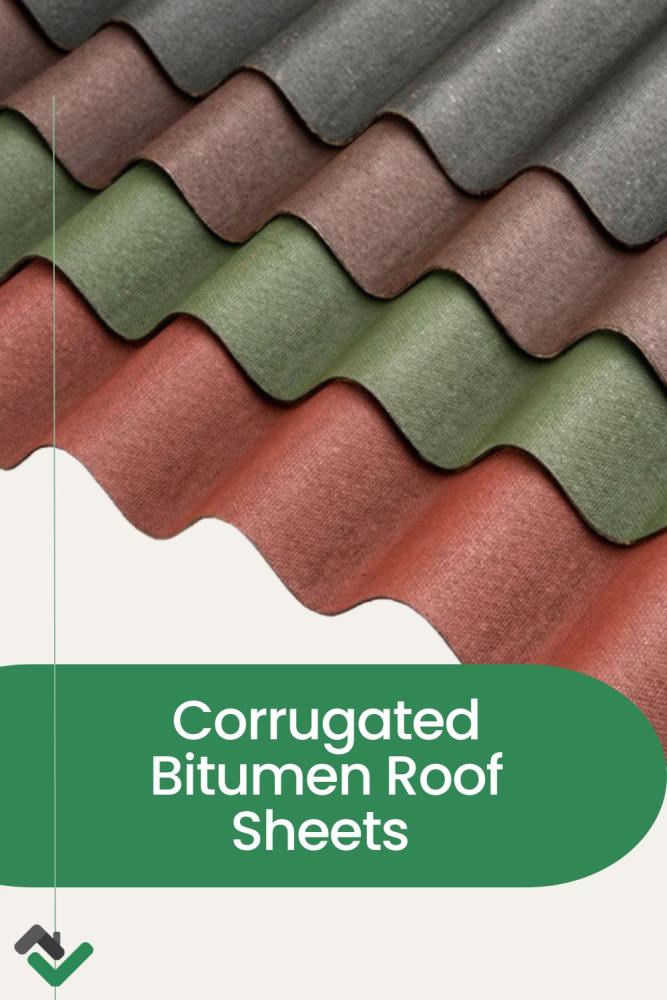
They’re almost always corrugated. The ridged profile adds some structure to what is otherwise a relatively flexible material, helping it hold shape across a roof. It also helps water run-off and allows the sheets to overlap without gaps - essential for keeping rain out. Flat bitumen sheets do exist, but they’re rare and not usually intended for roofing (bitumen felt usually comes in rolls and is flat - but sheets typically refer to the corrugated version discussed in this article).
Bitumen sheets are often a go-to choice for:
-
Garden sheds and lean-tos
-
Bin stores, log stores and compost shelters
-
Bike sheds, allotment storage or temporary shelters
-
Utility corners, DIY workspaces or side-return cover
Most bitumen sheets are around 2m long - long enough to cover a typical shed roof panel in one piece, but still short enough to handle without the sheet bending under its own weight.
They aren’t made in 3m lengths for that reason, as extra length would increase the risk of bending or cracking during handling or once installed. If you do see 3m sheets advertised, they’re often a different product, mislabelled or simply packs of shorter sheets sold together.
Widths vary, often between 820mm and 950mm, but because the sheets are designed to overlap slightly when fitted, the cover width - the part that’s actually visible once overlapped - is usually around 100mm less (so c. 850mm cover width on a 950mm total width sheet). The cover width is the measurement you should use when working out how many sheets to order (also try our handy bitumen sheet calculator here).
When it comes to thickness, most fall between 2.2mm and 3mm. The thicker sheets feel a bit more rigid and can span short gaps more neatly, which is useful for slightly larger or more exposed sheds. That extra stiffness can make them less likely to flex or distort during installation, but it doesn’t replace the need for proper support underneath.
That frame support is crucial and usually comes from one of two setups:
-
A fully boarded roof (plywood or OSB sheets covering the whole frame)
-
Closely spaced battens - narrow wooden strips running across the rafters, no more than 400mm apart
If the frame underneath has big gaps - which is common on some cheaper or metal-framed sheds - it’s worth adding a few extra battens. This gives the fixings something solid to bite into, helps the sheets sit flat and avoids problems like sagging or lifting in bad weather.
Bitumen sheets also work best on pitched roofs. Aim for at least a 5° slope (around 10cm drop per metre). Anything flatter risks pooling water, which can lead to leaks or sagging over time.
As for whether you need a membrane underneath, the answer is usually no - unless you’re fixing onto a fully boarded surface and want an extra layer for damp control. For most garden shed roofs, it’s not essential.
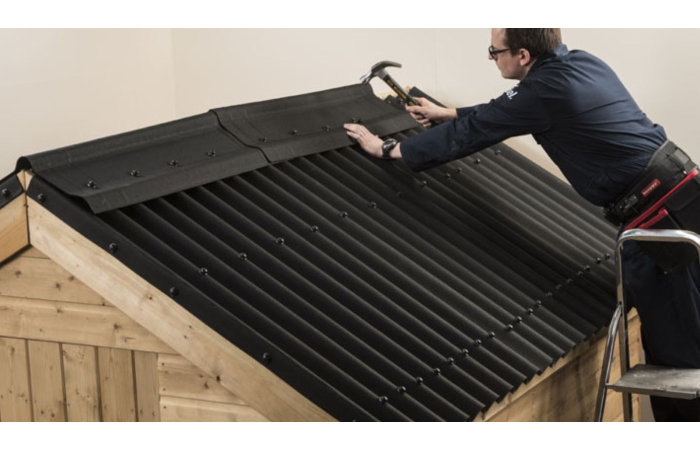
Bitumen is naturally waterproof and the corrugated shape helps rain run off quickly, as long as the sheets are overlapped correctly and fixed in the right places.
Leaks are usually down to poor fitting rather than a fault with the material. With a solid roof frame and decent support, bitumen sheets will stand up well to typical UK weather:
-
Rain: Usually quieter than metal sheets in heavy downpours, with less of the “drumming” effect that metal can produce.
-
Wind: Can hold firm in windy conditions when fixed securely - typically along every corrugation at the edges and every second ridge across the middle (check manufacturer guidance).
-
Sun: Most bitumen sheets are UV-resistant, though colour fading can occur over time. This tends to be cosmetic rather than a performance issue.
-
Cold: Sheets are more brittle to cut or fix in frosty weather, so installation is easier in mild conditions
It's always sensible to do basic maintenance each year with quick spring and winter roof checks to keep on top of any issues.
How long do they last?
Some bitumen sheets come with manufacturer guarantees of up to 15 years, like this bestselling Coroline sheet. Many more will offer up to 10.
Realistic lifespan largely depends on how the roof is built and how well the sheets are fixed. You’re more likely to get better long-term performance if:
-
The supports are evenly spaced (usually 30–40cm apart)
-
Fixings are used correctly - especially along edges and overlaps
-
The sheet isn’t lifting, flexing or exposed to unusual stress
-
Where sheds are poorly framed or the roof is left under strain, bitumen can wear out sooner. But on a typical garden shed or timber structure, with the basics done well, they can usually perform reliably for many years.
I heard bitumen sheets smell...
You might notice a slight bitumen smell at first, but it usually fades quickly once the sheets are fitted!
Bitumen sheets are most often used for roofing garden sheds, so it makes sense to compare them in that context. If you’re roofing something similar - like a bin store, workshop or lean-to - the same principles usually apply.
Each material has its own pros and cons, but here’s a broad steer based on what matters for most shed owners:
Compared to felt:
Many sheds are supplied with a felt roof. Like bitumen sheets, some types of felt use bitumen for waterproofing - but that’s where the similarity ends. Roofing felt usually comes in flexible rolls that are laid over solid boards, with the joins sealed using adhesive or, for heavier grades, heat.
The two main types are:
Basic bitumen-based felt – the cheapest, most common option on off-the-shelf sheds.
Synthetic or fibreglass-reinforced felt – tougher, more tear-resistant, and longer-lasting.
Felt can give a neat finish and, on small sheds, is often seen as a quick option - especially for basic felt applied with adhesive. But it can be fiddly to handle, and even small tears often mean replacing an entire section. Bitumen sheets don’t require glue, heat or a fully boarded roof - just close, even supports - and individual panels can be replaced more easily. Good synthetic felt may outlast them, but the basic felt on most sheds usually won’t.
Compared to metal sheets:
Metal roof sheets typically last longer and offer a tougher finish than bitumen sheets, but they're heavier, sharper to work with and need a stronger, more evenly spaced frame underneath. They're also less forgiving if the shed isn’t perfectly square. Bitumen suits smaller, lighter timber sheds better while metal tends to make more sense for larger, more permanent structures (learn more about which building types work best with metal sheets in our guide here).
Compared to EPDM rubber:
EPDM is mostly used on flat roofs, so it’s rarely a natural fit for sloped shed roofs. It’s durable and clean-looking but needs full adhesive bonding and careful prep. Bitumen is much simpler for the average timber shed and doesn’t require specialist tools or techniques.
Broad rule of thumb:
Bitumen sheets are one of the most straightforward options when you want a quick, weatherproof covering for a small timber shed - and when you’re happy to accept a lifespan nearer 10-15 years rather than 20+. If the shed is unusually exposed, valuable or built to a higher spec, a different material might be worth considering.
If you’re replacing an old felt roof on a shed, you might be wondering whether you can simply install bitumen sheets over the top - without stripping everything off first.
In some cases, yes - but only if the surface underneath is:
-
Completely dry – no trapped moisture
-
Lying flat – no bubbles, ridges or sagging
-
Firmly fixed – no loose or lifting sections
-
Properly supported – either with a solid deck or battens spaced no more than 400mm apart
If those conditions are met, fitting new bitumen sheets over old felt might be a bit of a time-saver. But if the felt is damp, bumpy or starting to lift - strip it off.
Trapped moisture can lead to rot in the timber below. And if the base isn’t flat and secure, the new sheets are more likely to warp, crack or lift in bad weather.
(!) Not sure? If you’re unsure about the condition underneath, it’s safer to strip back and start from the deck up or check with a trade professional.
Is Bitumen the Right Call for Your Roof?
There are a lot of reasons to love bitumen sheets and they make sense if:
-
You want a fast, fuss-free DIY roof
-
You want something easy to work with - even for the inexperienced
-
You’re replacing worn-out felt or plastic
-
You don’t want to reinforce your whole frame
-
You’re roofing something functional, not high-spec
-
You want to keep costs low but still get a proper weatherproof finish
Where to next?
Explore more ideas or shop products below.