Quick DIY Fixes for a Leaking Shed Roof
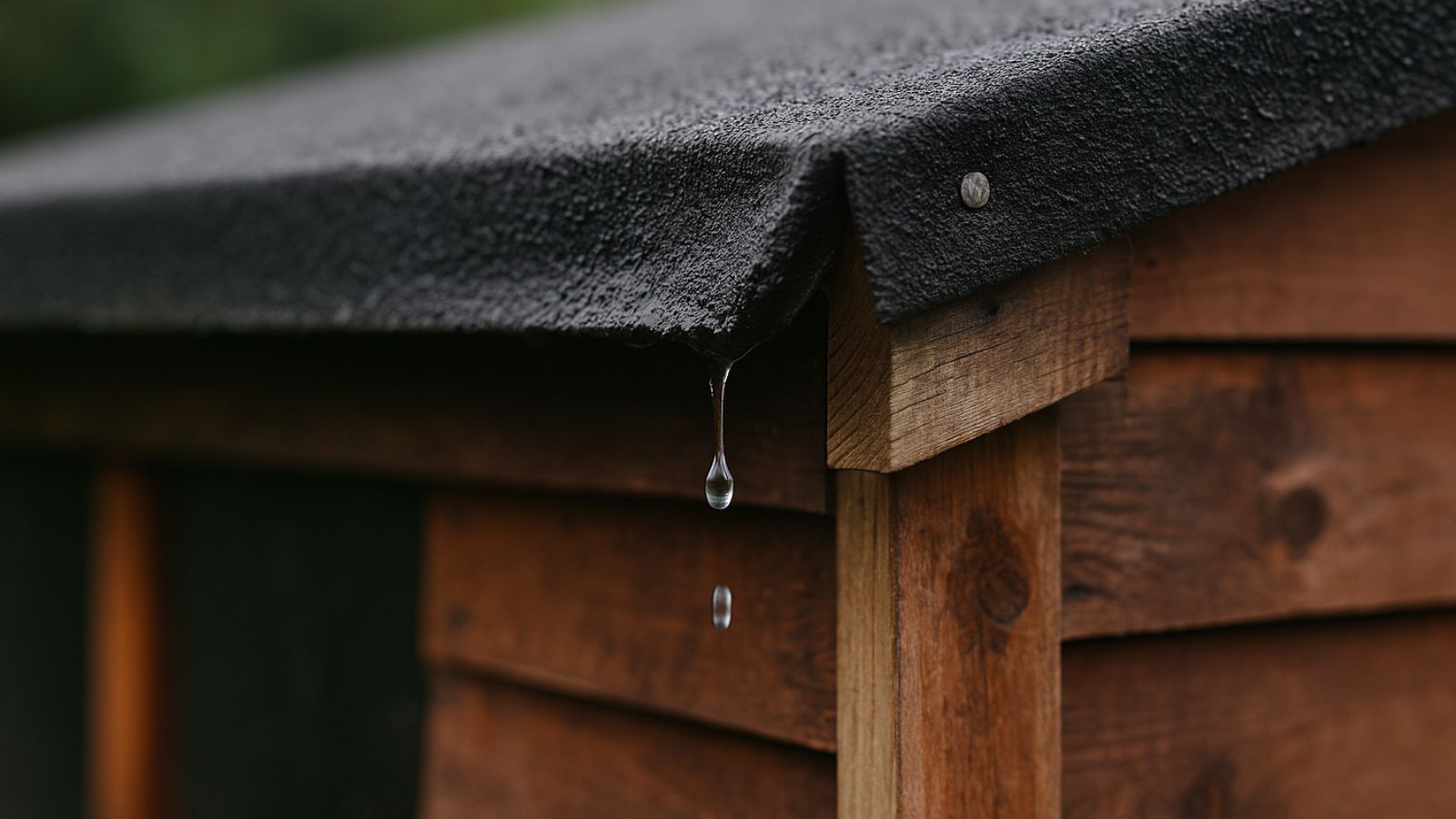
This guide will help you with some quick repair ideas if your shed has felt or bitumen sheet roofing and you've got a leak.
But first, if you’ve just spotted a leak and haven’t done this yet:
- Put a bucket underneath the drip – or even a tray or old towel - to limit damage inside.
- If you have one, use a tarp or plastic sheet to cover the area outside. Weight the top edge securely so it can’t lift in the wind.
- If the weather’s too windy to cover the roof safely, focus on protecting the inside and wait for calmer conditions before attempting any repair.
- Don’t try to seal anything wet - repairs will only hold if the surface is clean and dry.
(!) Do not climb onto your shed roof
Shed roofs aren’t designed to take weight, especially if they’re old or damaged. Don’t walk on the roof and use a stable ladder if you need to inspect or repair it. Never work alone or in high winds.
Now on to the repairs for these two most popular shed roofing materials.
In this article:
Important before you start: roof structure assessment
Step 1: Find out where water is getting in
Step 2: Quick shed leak fixes:
IMPORTANT before you start: safely assess the roof structure
This guide is for sealing small leaks in otherwise sound roofs. But if your shed roof is already too far gone, it may not be safe to attempt a quick fix
Watch out for these warning signs:
- Do not attempt a fix if the roof boards are soft, sagging or rotten.
If the boards beneath the roof are sagging, rotten or crumbling, this is a structural issue. Don’t attempt a repair. The roof may be unsafe to work near or around and a full strip-and-replace is the only safe option. - There’s damage across the whole roof.
If felt is cracking everywhere or several bitumen sheets are splitting, isolated repairs won’t stop the leaks for long. - Parts of the roof keep lifting or shifting.
If edges or joints won’t stay sealed, the structure underneath may be loose or failing.
In these cases, don’t waste time chasing leaks. A planned re-cover will save you hassle, cost and further damage - check out our guide on bitumen roof sheets if you're considering making the switch from felt or need to replace existing sheets.
Step 1: Find out where water is getting in
You’re fixing the entry point, not the puddle. Water often runs along boards or rafters before it appears inside - the leak entry point isn’t necessarily directly above the drip.
- Inside check (daylight/torch): turn the lights off and look for pinholes, slivers of daylight or damp tracks. Follow the stain uphill to the highest damp point - that’s usually where water enters.
- Outside check (from a ladder): scan edges/corners, overlaps and fixings first - they fail most often.
- Felt specifics: most shed felt is nailed with galvanised clout nails, which can lift and leave tiny holes. If yours was glued or stapled instead, you’re more likely to see lifted seams/edges.
- Bitumen sheet specifics: nails/screws can loosen; caps/washer seals can crack; short/loose overlaps (the joint where one sheet sits over another) can let wind-blown rain under the joint.
(!) Remember: shed roofs aren’t designed to take weight - don’t climb onto the roof. If you can’t reach safely from a ladder, stop and get some help from a tradesperson.
Is it actually condensation?
If you can’t find an obvious leak, it might not be a leak at all - condensation can look very similar. It forms on the underside of cold roof sheets, especially in unventilated sheds and often drips onto stored items just like a real leak would. Learn more in our guide to preventing condensation in shed roofs.
Step 2: Quick shed leak fixes
You’ll need a dry, clean surface for anything to stick properly. If the weather’s too cold (usually below 5–10°C) or rain is due, cover the area and wait for better conditions.
Felt shed roof fixes
A. Lifted edge or corner
You’ll need: cold-applied bitumen adhesive, galvanised clout nails, a hammer, bitumen mastic, brush/roller.
- Lift the loose flap and brush away dirt and grit.
- Apply adhesive to both surfaces - the underside of the felt and the roof deck
- Press the felt down firmly, working from the fixed side outward to push out air.
- Fix the edge with clout nails every 50–100 mm.
- Seal each nail head with a dab of mastic, then apply a thin line of mastic along the outer edge of the felt to help stop wind or rain getting underneath.
If your shed was stapled or glued originally, you can do the same again - but clout nails are more secure and far less likely to lift in wind or rain.
B. Small tear, nail hole or puncture
You’ll need: self-adhesive felt repair patch or repair tape, roller, bitumen mastic.
- Dry the area thoroughly.
- Cut a self-adhesive patch or tape at least 50 mm larger than the damage in all directions. Round the corners.
- Press it down firmly and roll over it to flatten any bubbles
- Seal around the patch with a continuous bead of mastic.
C. Open seam or larger split
You’ll need: cold-applied adhesive, felt patch strip (or wide repair tape), clout nails and hammer (if the roof is nailed), bitumen mastic.
- Clean the joint and dry it.
- Brush adhesive under both sides of the felt that have opened up and press them back together to close the seam.
- Cover the repair with a strip of roofing felt or a self-adhesive repair tape. It should extend at least 50–100 mm past the damage on all sides.
- If your roof was nailed originally, add clout nails along the edges of the patch, spacing them every 50–100 mm.
- Run a thin line of mastic around the edges of the patch to help seal it and stop water getting underneath.
If the felt cracks when handled, has fine surface cracking or new leaks keep appearing in different places, patches may only hold briefly. A full re-cover is usually the next step.
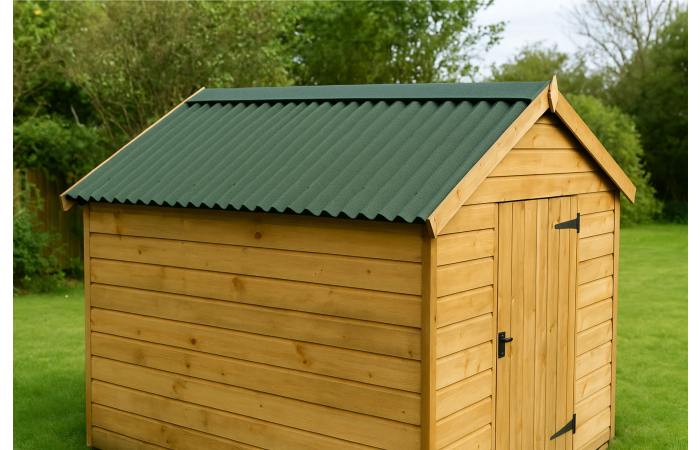
Corrugated bitumen shed roof fixes
A. Loose or missing fixing (water through the hole)
You’ll need: correct fixings (roofing nails or screws with caps and washers), a hammer for nails or a cordless drill for screws, bitumen mastic.
- If the fixing is loose, remove it completely.
- Check the condition of the hole.
a. If it’s still solid, install the new fixing into the same spot, bedding it into a small amount of mastic.
b. If the hole has worn out or pulled through, fill it fully with mastic to seal it, then make a new fixing point slightly offset. Always fix through the ridge of the corrugation, not the dip. - Most bitumen sheet fixings include a plastic or metal cap to cover the head and help keep water out. After installing the new fixing, press the cap down firmly onto a small bed of mastic to help seal around the hole.
B. Hairline crack around a fixing / small puncture
You’ll need: bitumen mastic. Optional: a small offcut of bitumen sheet or self-adhesive repair tape.
- Clean and dry the area around the damage.
- Apply a generous layer of bitumen mastic over the crack or hole, extending at least 30–50 mm past the edges.
- For extra strength, you can press a small piece of self-adhesive bitumen repair tape over the top while the mastic is still wet (even better if you have a small bitumen offcut hanging around, this can be pressed in instead).
- If you do add tape or offcut, seal around the edges with another thin layer of mastic to prevent water tracking underneath.
This kind of repair works best for small, local damage. If the sheets are cracking in multiple areas or the surface feels brittle, it’s time to start planning a full replacement.
C. Leak at an overlap
You’ll need: bitumen mastic. Optional: a narrow strip of self-adhesive bitumen repair tape or a purpose-made cover strip.
- Clean and dry the area where the sheets overlap.
- Apply a thin, continuous line of mastic along the length of the join - right where the top sheet meets the one underneath.
- For extra protection, you can cover the joint with a narrow strip of self-adhesive repair tape or a flexible cover strip. Press it down firmly to follow the shape of the corrugation.
- Seal along both edges of the tape or strip with another fine bead of mastic to stop water getting underneath.
This is a quick way to stop wind-driven rain getting in at loose or poorly sealed joins.
If overlaps are failing across multiple areas - or the sheets feel soft, brittle, or chalky - it’s a sign the roof is nearing the end of its life. A re-cover may be the better option.
Where to next?
A good seal can keep things dry for months but it’s still a temporary fix. Check the roof again after heavy rain and keep it clear of leaves and other debris to help water run off cleanly.
If you find yourself chasing new drips or repairing the same area more than once, it’s probably time to re-cover the roof, it’ll save you time, hassle and money in the long run.
Read more about how to keep your shed in perfect working order or shop shed roofing products below.