Beginner’s Guide to Metal Roof Sheets
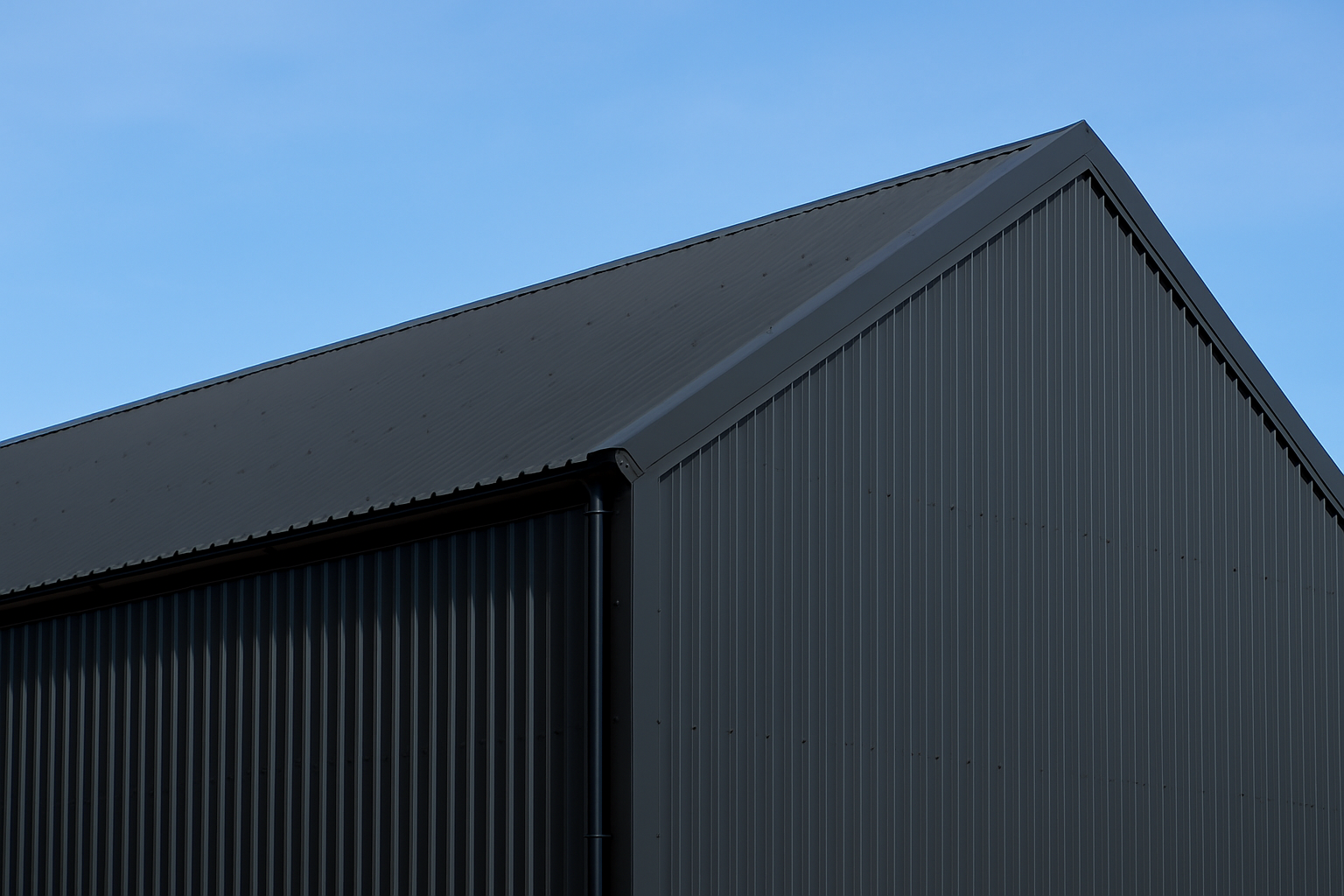
Planning a new roof for your agricultural building, warehouse or carport? Metal sheets are a smart, long-lasting option - but with so many profiles, coatings and add-ons to choose from, it’s not always clear where to start.
This guide covers the key things you need to know:
- What corrugated and box profile mean - and how they differ
- What terms such as 32/1000 and plastisol-coated steel refer to
- When it’s worth adding anti-condensation backing
- Whether you should try and fit metal sheets yourself
If you’re weighing up your options or wondering what to look out for, you’ll find everything here to get started with confidence.
In this article:
Corrugated v.s Box Profile - What's Right for You?
How are metal roof sheets measured?
- Corrugated sheets short summary
- Box profile sheets short summary
- Quick compare - corrugated v.s box profile
Polyester vs Plastisol - Which Metal Sheet Coating is Better?
About insulation, condensation & noise
- What are insulated steel roof panels and insulated steel roof systems and what are they best suited for?
- What are Anti-Condensation Sheets & do I Really Need Them?
- How to Reduce Noise from a Metal Roof
- What Metal Roofing Type is Best for my Project?
Can I Install Metal Roofing Myself?
Corrugated vs Box Profile: What’s Right for You?
There are two main types of metal roofing sheets - corrugated and box profile. Both are strong, weatherproof and commonly used on farm buildings, garages, carports and lean-tos. But they have different looks, strengths, and often, measurements. So, to avoid confusion let’s start with the basics so we know what we’re comparing with what.
How Are Metal Roof Sheets Measured?
Before comparing profiles (the shape or pattern of the sheet’s surface), it’s worth understanding how metal sheets are sized:
- Overall width is the full edge-to-edge width of the sheet.
- Cover width is the usable width after overlaps are accounted for. This is the number you’ll use when working out how many sheets you need.
- Cover length is the same idea as above - whilst most sheets are made to standard widths, you may find that sheets are available in both custom and standard lengths.
All metal sheets are designed to be installed with a slight overlap. This ensures rainwater doesn’t get through the joins. That overlap is why cover width/length is always smaller than the full sheet and is the one you’ll want to check before you buy. See more about sizes for metal sheets in the summaries below.
Corrugated Sheets - A Quick Summary
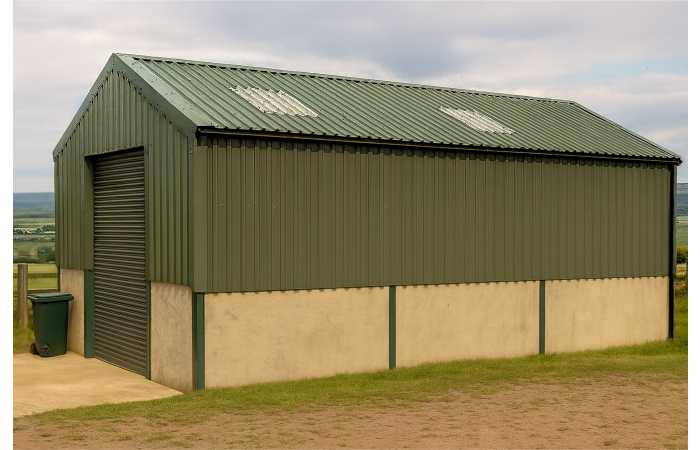
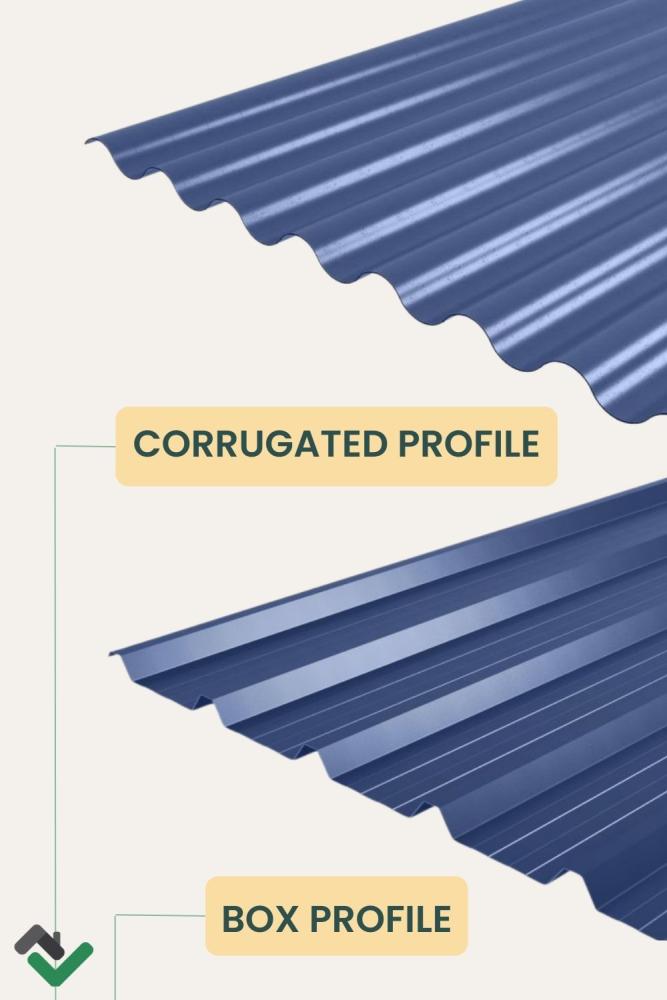
Corrugated metal sheets have a regular wavy pattern and a more traditional appearance. They’re lightweight, easy to handle, and often used on sheds, lean-tos and small timber-framed roofs.
You’ll often see them labelled with numbers such as 13.5/3, where:
- 13.5 = the number of corrugations (raised wave sections) across the width of the sheet.
- 3 = the distance between the peak of each wave, in inches.
You will then also probably see the dimensions listed in metres and millimetres - just to shake things up!
An example of a standard corrugated sheet width:
- Overall width: approx. 1220mm
- Cover width: approx. 990mm (after overlap)
In terms of length, there isn't a standard length as such and you'll often find these steel sheets available in custom lengths up to 7m (and perhaps occasionally more - but you wouldn't want to go much longer than this for stability reasons).
Corrugated sheets are a popular choice for a wide range of projects but they’re especially popular on larger farm buildings and warehouses etc.
Box Profile Sheets - A Quick Summary
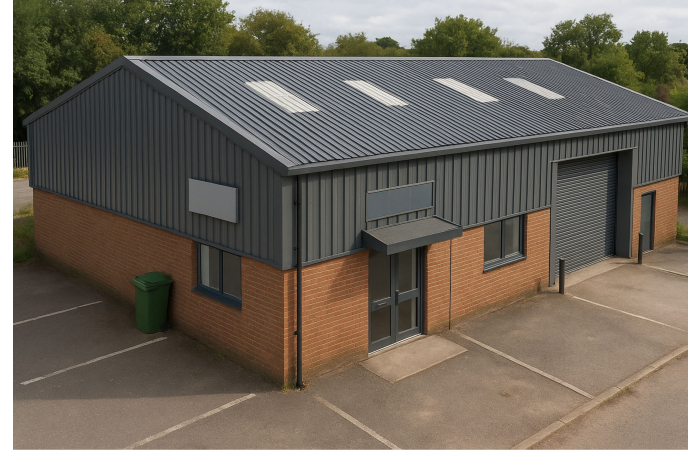
Box profile sheets have a more angular shape, with flat sections and raised ridges known as ribs (this profile is sometimes also called "ribbed roofing" or "trapezoidal sheets"). These ribs add strength and rigidity, making box profile a good option for garages, workshops and wider roof spans.
Common profiles include 32/1000 or 34/1000, where:
- 32 or 34 = the rib height - the distance from the flat section to the top of the ridge, in millimetres.
- 1000 = the cover width, also in millimetres (1 metre)
Standard sizing example:
- Overall width: approx. 1070mm
- Cover width: 1000mm (after overlap)
The flatter sections between ribs also help water drain efficiently down to the eaves.
Like the corrugated varieties, box profile sheets often come in custom lengths up to 7m rather than standard sizes.
Choosing Between Corrugated and Box Profile
|
Factor |
Corrugated |
Box Profile |
|
Look |
Traditional, softer lines |
Modern, angular finish |
|
Feel |
Strong but better suited to smaller spans or closely spaced supports |
High strength, handles larger spans and exposed locations well |
|
Typical uses |
Barns, lean-tos, older stables, small utility shelters |
Garages, workshops, carports, modern agri or commercial builds |
|
When it makes sense |
Smaller spans or when looks matter more than strength |
Longer spans, visible roofs, or when strength is key |
Both profiles are tough and resilient, easy to work with and suitable for light DIY jobs as well as heavier-duty commerical and agricultrual projects. The choice will come down to the finish you want, the size of the job - and budget.
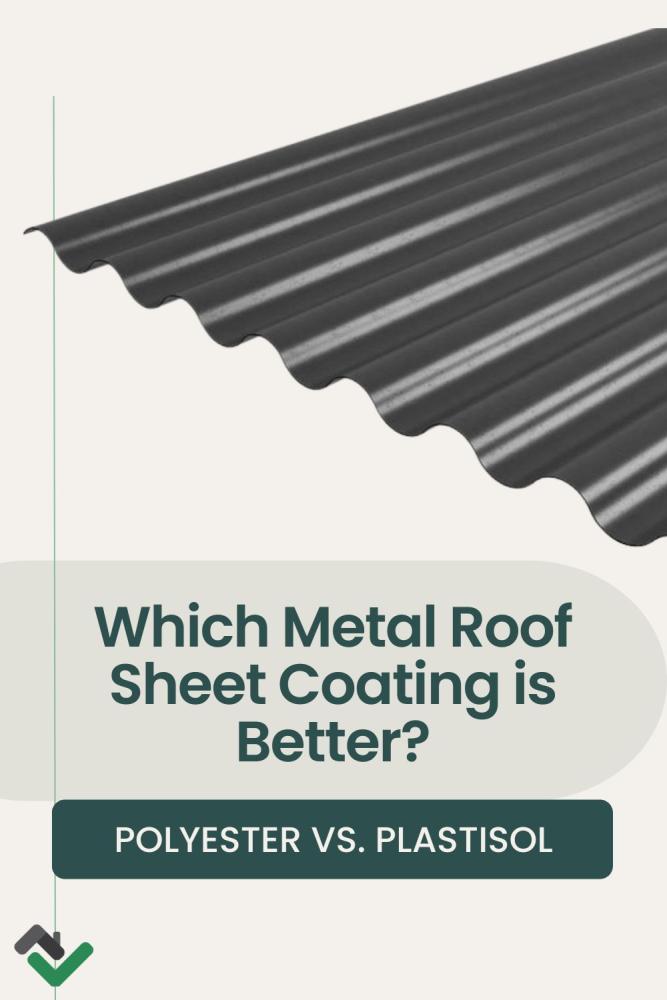
Polyester vs Plastisol - Which Metal Sheet Coating is Better?
The basic construction of a metal roof sheet is obviously vital, but the coating is also important for protecting the steel underneath and an additional point to consider before buying.
Most metal sheets come with a polyester or plastisol finish. Both are protective, but each suits different project needs. Here's how they compare:
|
Feature |
Polyester-Coated |
PVC Plastisol-Coated |
|
Finish |
Smooth, painted surface |
Textured outer layer (often leather grain-style) |
|
Durability |
Good for most DIY or garden builds |
Longer-lasting, better suited to heavier use |
|
Scratch resistance |
Prone to light marking during handling or fitting |
Tough outer layer resists scuffs and scratches |
|
Appearance over time |
Can fade slightly in direct sun |
Strong colour retention and weather resistance |
|
Best for |
Sheds, lean-tos, small outbuildings on a budget |
Garages, workshops, larger or more visible roofs |
|
Cost level |
Lower - a good balance of cost and performance |
Higher - a longer-term finish with less maintenance |
Common questions about finishes
Do plastisol sheets look plastic?
They usually have a textured, slightly matte finish - not cheap or synthetic-looking. Plastisol is often chosen for its ability to hide marks and blend well with timber or modern cladding.
Is polyester fragile?
Not at all - but it can scratch more easily during handling. Care during installation goes a long way.
Is plastisol worth the extra cost?
If the roof is in a visible location, needs to last for 15+ years, or will take regular wear (like from tree branches), plastisol often pays for itself in durability.
What About Galvanised Sheets?
Galvanised sheets are finished in zinc but left unpainted - giving a plain silver-grey appearance. While they don’t offer the colour choice of coated sheets, they’re still:
- Tough and rust-resistant, thanks to the zinc layer
- Cost-effective for larger or low-visibility builds
- Ideal for utility spaces, farm buildings, animal shelters, or where airflow and strength matter more than finish
They may dull slightly over time, but they won’t peel or flake - and they’re often chosen specifically for their clean, simple look.
For practical, hard-working structures, galvanised sheets offer reliable protection without the extra cost of decorative finishes.
Insulation, condensation & noise
What are insulated steel roof panels and insulated steel roof systems and what are they best suited for?
While standard single-skin steel sheets are the simplest, most cost-effective option and ideal for open or well-ventilated buildings, there are occasions where insulation will be needed. The main options are:
Insulated roof panels (composite panels) are the “all-in-one” upgrade: steel outside with a bonded insulation core. They cost more upfront, but they give you weather protection + insulation in one product, with fewer layers to specify and a quicker route to a warmer, more usable space.
Double-skin (twin-skin) systems are the build-up version: outer sheet, insulation and an internal liner as separate parts. Like making your own sandwich v.s buying one ready-made. The system option is usually chosen when you want more control over the spec (e.g. insulation thickness) or a clean internal finish, which is why they’re also common for both roofing and cladding - but they’re typically more involved to install than a single composite panel.
What are anti-condensation sheets & do I really need them?
If you thought anti-condensation sheets might just be a gimmick - you’d be wrong! If you’re roofing an enclosed, uninsulated space - especially a larger building, it’s important to think about condensation before you fit the sheets.
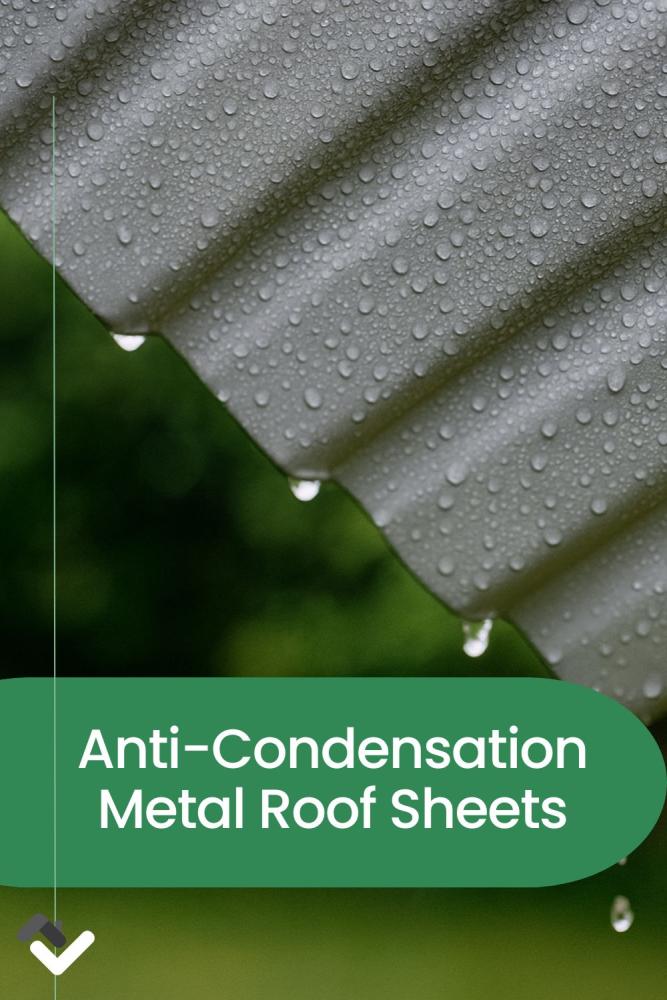
Even if the roof’s watertight from above, moisture can build up underneath. When warm air inside hits the cold metal surface, water droplets form on the underside - and over time, that can lead to drips, damp patches or even mould and rot in the structure below.
What anti-condensation backing does
While single-skin steel roof sheets don't have insulation properties as discussed above, some of these metal sheets come with a special lining on the back that’s designed to absorb moisture before it turns into drips and it can be an effective way to manage possible condensation. The backing holds the water temporarily, then releases it gradually back into the air as the temperature rises (as long as there’s good ventilation).
You might want to consider it if:
- You’re storing tools, timber or anything else sensitive to damp
- The building’s enclosed and not insulated
- You’d rather avoid dealing with internal drips later on
That said, it’s not essential for open-sided roofs like carports or shelters - and it’s not a substitute for good airflow. Even with anti-condensation backing, you still need to plan for basic ventilation to keep the roofspace dry and healthy long-term.
Note: anti-condensation backing must be applied at the factory, before the sheet is formed, you can’t add it afterwards.
How to Reduce Noise on Metal Roofs
One of the most common concerns with metal roofing is whether it’ll be noisy in the rain - yes, it certainly can be, particularly on uninsulated roofs.
This becomes more important if:
-
You’re roofing a workshop or garage where people will spend time
-
You’re building a livestock shelter or stable, where loud impact noise could startle animals
-
You want a more enclosed space to feel comfortable year-round
Can You Do Anything About It?
Yes - to an extent. But it’s important to be realistic.
-
Acoustic Insulation (such as rigid boards) can help dampen the sound of rain and reduce the sharpness of the noise inside the building.
-
But it won’t eliminate it entirely - especially during heavy rain or hail. Metal roofs will nearly always carry more sound than tiles or felted surfaces.
-
To be effective, insulation should ideally be installed during the build, before the sheets go on. It’s not always something you can add easily afterwards.
And if you are insulating, ventilation becomes even more important. Without it, trapped heat and moisture can build up inside - leading to damp, discomfort and long-term issues with condensation.
Note: Anti-condensation backing is not designed to reduce noise and won’t make a meaningful difference for that issue in most cases and even insulated steel sheets are primarily designed for thermal, not acoustic insulation. Learn more about insulating metal sheets for sound here.
Which Metal Roofing Type Is Best for My Project?
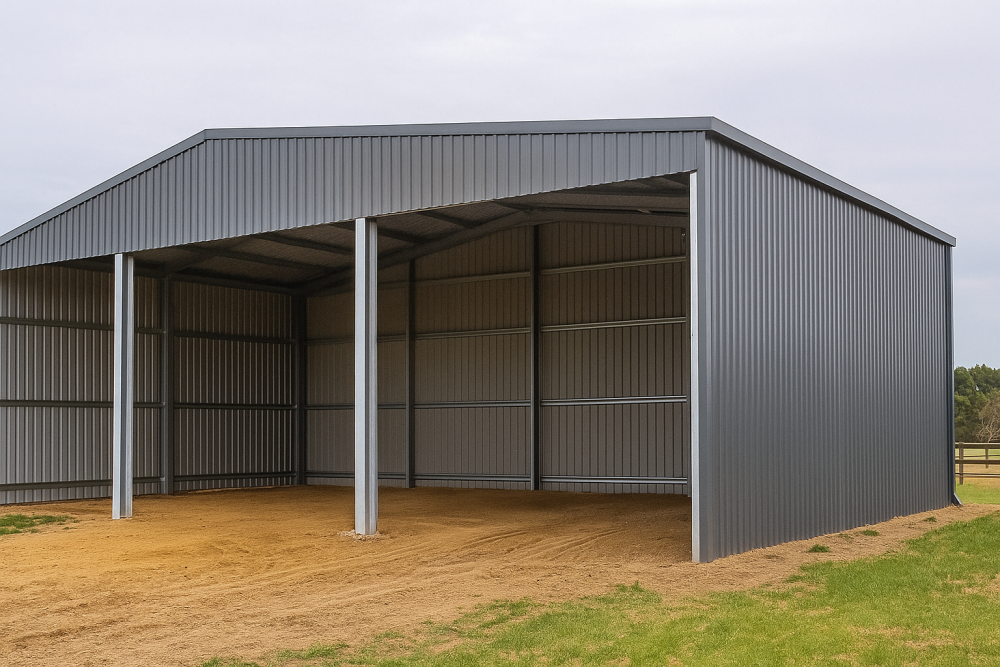
Both corrugated and box profile metal sheets can be used across most projects - but depending on the size of the structure and the finish you're after, one may be a better fit than the other.
Here’s how they compare across common applications:
|
Project Type |
Corrugated |
Box Profile |
|
Barns & Stables |
Common in rural settings. Offers traditional agricultural styling. |
Stronger shape holds up better on wider spans or exposed sites. Often chosen for modern agri builds. |
|
Warehouses & Industrial Units |
Can be used on smaller or secondary buildings. |
More typical. Clean finish and high strength suit larger industrial structures. |
|
Workshops & Garages |
Works on simple timber frames, but may lack stiffness for insulation or interior lining. |
Rigid, low-maintenance, and easier to insulate. Preferred for workshops or garages with regular use. |
|
Carports & Lean-tos |
Suits simpler designs or where appearance matches existing buildings. |
Good for open-sided builds where strength, water run-off, and lifespan matter. |
|
Sheds |
Can work for basic sheds, but may be heavier and more costly than needed. |
Sometimes used on larger sheds, but alternatives (bitumen, plastic) are often more practical. |
|
Garden Offices |
Rarely used — can be noisy and hard to insulate. |
Only suitable with proper insulation and soundproofing. Not a first choice for most setups. |
|
Open Shelters |
Cost-effective and flexible. Used for log stores, bin covers, etc. |
Also suitable. Often chosen based on availability or appearance. |
In short, either profile can work for most builds. If your structure is large, exposed, or needs a cleaner finish, box profile offers more strength and stability. If you're working on a small outbuilding with a simpler frame or want a more traditional look, corrugated may be the better fit.
Can I Install Metal Roofing Myself?
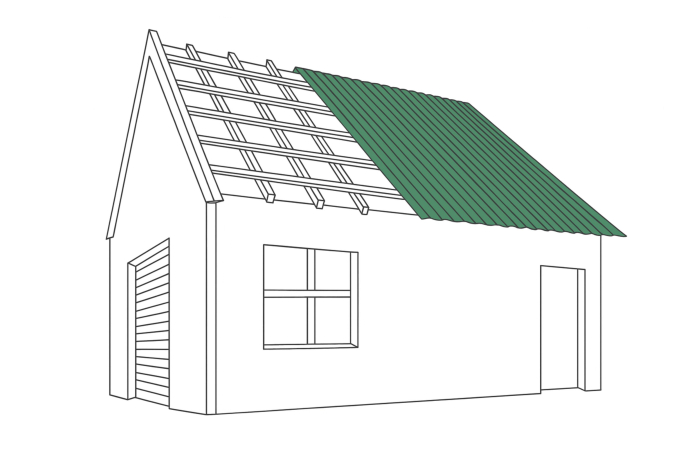
It’s possible - but it’s not as simple as it might look! Fitting metal roof sheets isn’t like putting up a shed roof or clicking panels into place. It involves structural prep, careful layout planning, correct fixings and safe working at height - all of which vary by project.
If you're an experienced DIYer or a generalist tradesperson, you might be able to take on a small, single-slope roof like a lean-to or small shed. But for anything bigger, taller, or more complex, most people will be better off hiring a professional.
Plus - make sure you don't get caught out with delivery issues - see our pre-order checks for metal roof sheets here.
Where to next?
Metal roof sheets may not be the easiest product to install for a DIYer, but they do offer a durable, practical and cost-effective solution - for all kinds of projects - that's hard to beat.
Explore more related topics or shop products with the links below.