Beginner’s Guide to Garage Roofing - Materials, Ventilation & Can You Replace it Yourself?
Garage roofs fail for all sorts of reasons and if you’re here, you’re probably trying to work out whether you need to fully replace it or it’s just a quick fix, what materials are best and most cost effective if you do need to replace it - and a bunch of other things to make sure your garage isn’t going to fall apart and damage your car or other belongings.
Garage roof replacements aren’t always the easiest DIY job - it might be possible in some cases but the advice differs a bit depending on whether your garage roof is flat or pitched. Keep reading to find out everything you need to know to get your garage roof working the way it should.
In this article:
Important:
Some older garages, especially those built before the 1990s, may have roofs made from asbestos cement sheets. These materials are legally classified as hazardous and can release dangerous fibres if disturbed - even during seemingly minor repairs.
Roofing Megastore does not recommend or advise any DIY work involving asbestos. If you suspect your garage roof may contain asbestos - or you're not 100% certain that it doesn’t - do not attempt any fix or removal yourself. Stop and contact a licensed asbestos contractor.
Before you can replace any roof covering, you need to be sure the structure underneath is still sound. That means the timber supports and boards holding up the roof - not just the visible surface.
The most obvious red flag is sagging. If the roofline dips in the middle, or the ceiling inside the garage looks warped or bowed, the structure may be failing. Unfortuantely, it's not always obvious, especially on flat roofs where there’s a ceiling or internal lining that hides what’s going on above.
Garage roofs aren't designed to take weight - especially older ones. If you can’t see the roof structure from below, or can’t safely inspect the edges from a ladder, you won’t always be able to tell what condition it’s in until the old covering comes off. If the structure is failing, you'll need to factor in a replacement for this as well as the covering itself. It you're in any doubt about its suitability, get a tradesperson in to consult.
If your garage roof has a leak that just needs a quick fix, check out our guide here. Otherwise keep reading for more on how to go about replacing flat and pitched garage roofs.
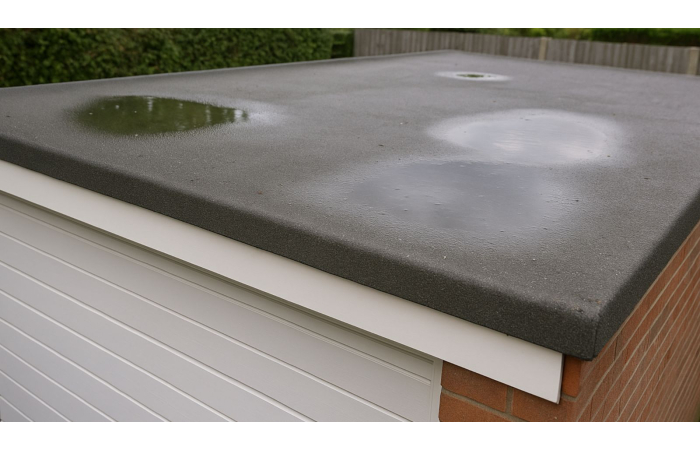
Flat garage roofs are common across the UK, especially on prefabricated or post-war buildings. Many were originally finished with traditional felt systems - usually bitumen-based and applied over timber boards or concrete panels. Over time, these coverings will become brittle, split at seams or begin lifting around edges.
More recent re-roofs may have used rubber (EPDM) or other single-ply membranes, but these are less common on older garages.
Regardless of material, poor drainage and ageing substrates often mean that once the roof begins to fail, full replacement is the most effective option (though you may be able to do a quick fix if it’s newer).
You don’t have to replace your current garage roof covering like for like. In theory felt can be upgraded to rubber, or rubber to fibreglass - but you must stick to materials the structure can safely support.
If you're unsure, assume it was built for lightweight coverings only and avoid anything heavier unless you're rebuilding the roof from scratch.
The three most commonly used materials for flat garage roofs today are:
Torch-on Felt
Still widely used. Applied in two or three layers using heat. It’s relatively inexpensive but can be prone to cracking and UV damage over time. Best suited to simple, small-span garages where cost is the main concern. Self-adhesive felt might also be an option but this material is usually better for a temporary fix on a small roof.
EPDM Rubber
A flexible, single-sheet membrane glued into place. Offers excellent weather resistance with very few joins. It needs a smooth, well-prepared deck and careful detailing at the edges, but typically lasts far longer than felt and is also very cost-effective.
GRP (Fibreglass)
A rigid, seamless shell formed with resin and matting. Extremely durable when properly installed. Best used as part of a full roof replacement, not a patch job.
These systems all have different installation methods and finishing requirements, but they’re all suitable for garages - provided the roof is in sound condition and designed to carry their weight.
It depends on the material - and your experience.
Most full garage re-roofs aren’t beginner DIY jobs. Systems like torch-on felt and GRP fibreglass require specialist tools and real installation skill.
But if you're confident with joinery-level prep and methodical work, then EPDM may be worth considering if you know what to plan and prep for:
-
Sheets are supplied in one piece and can be heavy and awkward to move - a 10m² membrane may weigh up to 40kg and can’t be dragged or folded
-
You’ll want a second person to help position it without damage
-
The roof must be stripped back and re-decked with clean, even OSB or ply
-
The sheet needs to be dry-laid and aligned perfectly before you start - once adhesive goes on, you can’t adjust it
-
You’ll use two types of adhesive - contact adhesive for the edges and where the sheet turns up the wall or over an edge, water-based for the main area
-
Edges, corners, pipes and wall joins all need precise detailing - these are the most common failure points in DIY jobs
-
It’s a full-day job that must be done in one go - in dry, still weather
Use our handy EPDM and GRP flat roof calculators here if you want to get an idea of material costs for your exact specifications.
Pitched garage roofs, where one or both sides slope visibly, are more forgiving than flat ones. Rain runs off more easily, moisture doesn’t pool (as long as sheets or tiles are installed correctly) and the roof timbers tend to stay in better condition for longer.
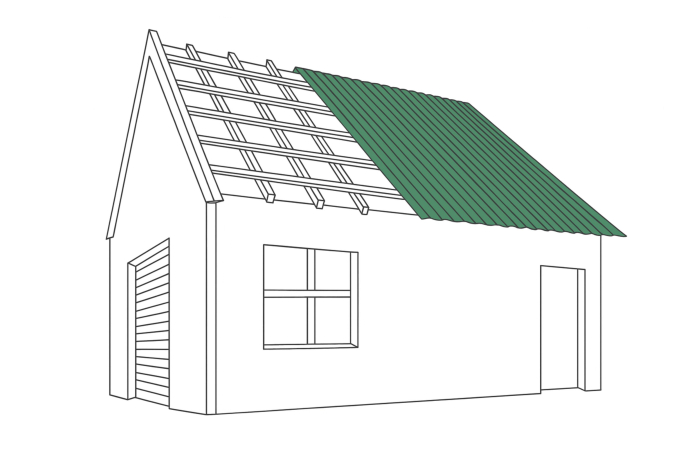
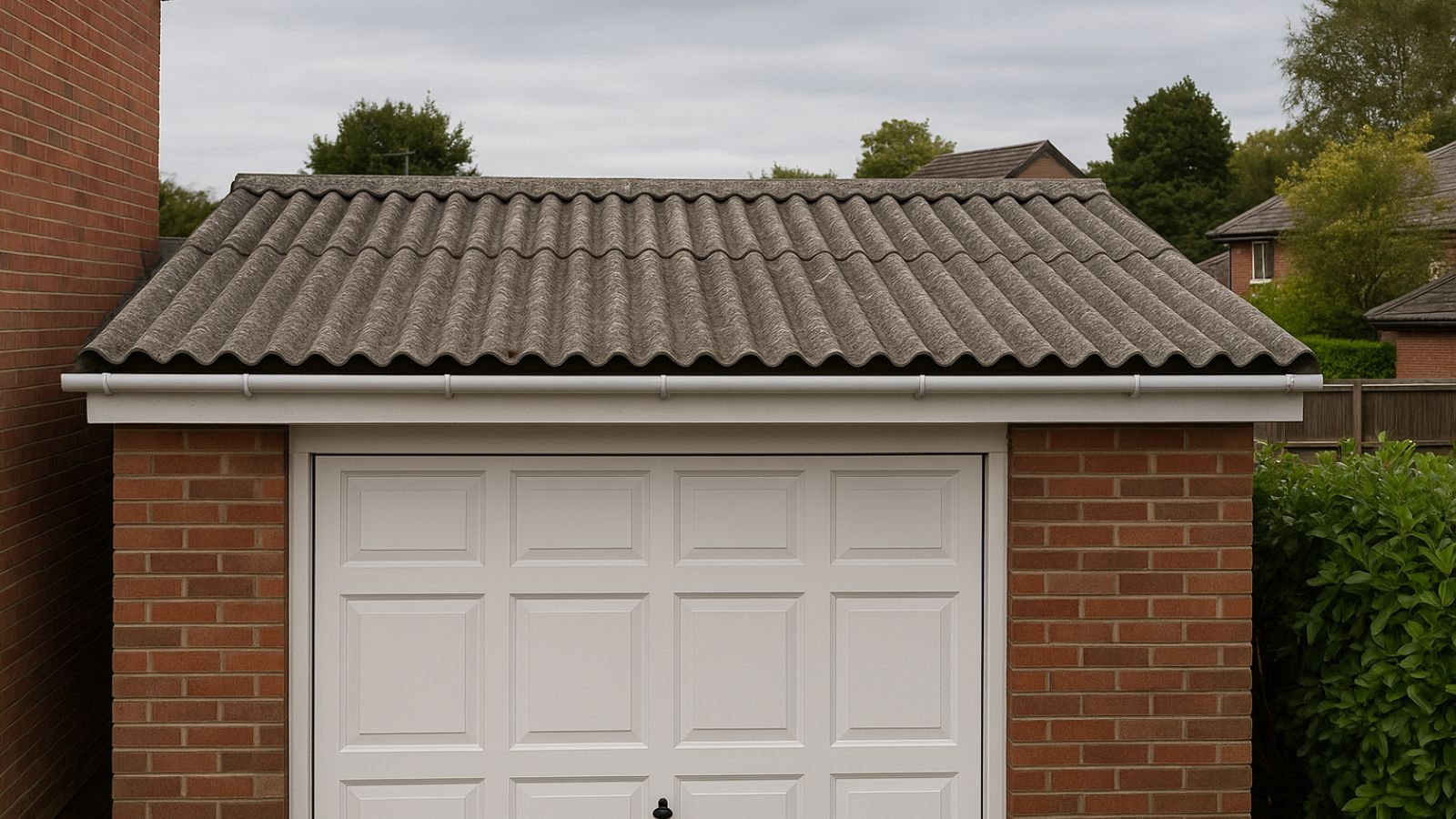
Many older garages were originally covered with corrugated sheets - typically bitumen, metal or cement-based (remember to take extra caution if you think they might be asbestos). Over time, these materials can crack, rust, warp or lift at the fixings, especially at overlaps and ridge joints.
Like flat roofing, you can change the cover material but you'll need to make sure your replacement material can be supported by the current structural support. That means if your garage currently has bitumen or even metal corrugated sheets, it might not support something heavier like fibre cement.
The most practical options for pitched garage roofs being re-covered are:
Corrugated Bitumen Sheets
The lightest and easiest option to handle. Simple to cut and install using basic tools. Best suited to small or single garages with standard timber supports.
Corrugated Steel Sheets
Durable and long-lasting. Heavier than bitumen but suitable for most garage roofs. A solid choice if you want a longer lifespan and the structure is sound.
Synthetic Tile or Slate-Effect Panels
Plastic systems designed to mimic slate or tiles. More fiddly than sheets, but lightweight enough for some garage roofs. Worth considering if appearance matters and the pitch is suitable.
Roof Shingles (Felt or Asphalt Type)
Suitable for garages with a boarded timber deck. Can look smart on timber-framed garages or side buildings. Can be slower to install and not really ideal for large areas.
A note on traditional tiles:
Traditional tiles like clay or slate are sometimes used where a garage has been built to match the house - but these require a very strong frame and aren’t suitable for most standard garages.
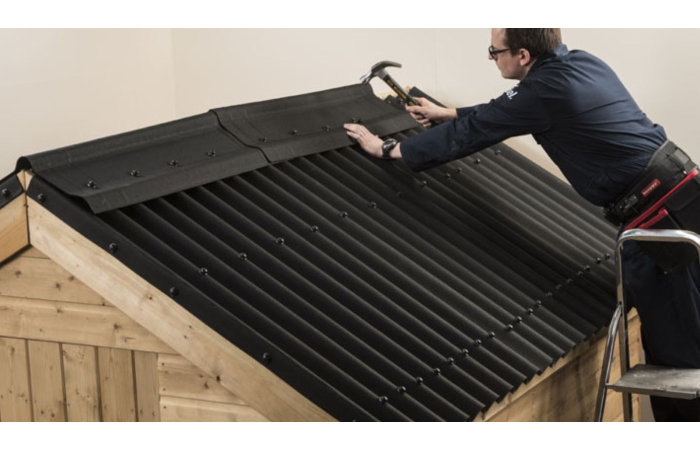
If the garage is small and the underlying support boards/beams are in sound structural shape, then yes - it might be a manageable DIY job with some help. Learn more about fitting corrugated bitumen sheets here.
But if you’re using corrugated metal or covering a larger roof, it might be best to bring a professional in – get more detail on what’s involved with installing metal roof sheets here.
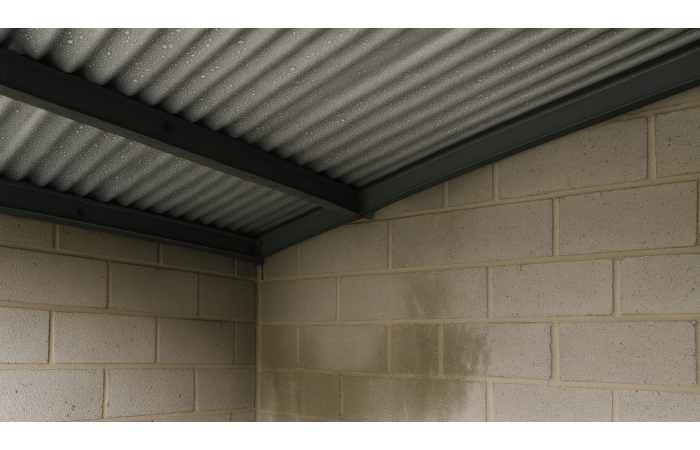
Condensation is common in garages - especially under metal. It can also be common to mistake water vapour collecting on the underside of cold sheets for a leak, but it’s usually just warm air that’s hit the cold and been transformed into water.
When this builds up it can start to cause real problems with damp and then mould or rot so it’s one to keep on top of.
The basic methods for preventing this are to make sure warm air has room to escape and it really depends on when and how your garage was built as to whether ventilation was fitted.
If there weren’t any vents put in the wall but the sealing around the doors/window isn’t ultra airtight, you’ll probably find condensation isn’t too much of an issue.
But if there are no wall vents and everything is sealed up tight, this is where problems can begin. Learn more about how to prevent condensation in garages here.
Where to next?
Garages are an important asset for homeowners. Whether they're used for storing cars and bikes or they act as a workshop or other storage facility, the last thing anyone needs is a roof that isn't doing its job properly. If you'd like some personalised advice or help choosing products to get your garage roof sorted, don't hesistate to get in touch with our friendly customer service team.
Or explore more related topics and start shopping products below.