Why Your Garage Roof Is Dripping When There's No Leak - And How to Stop It
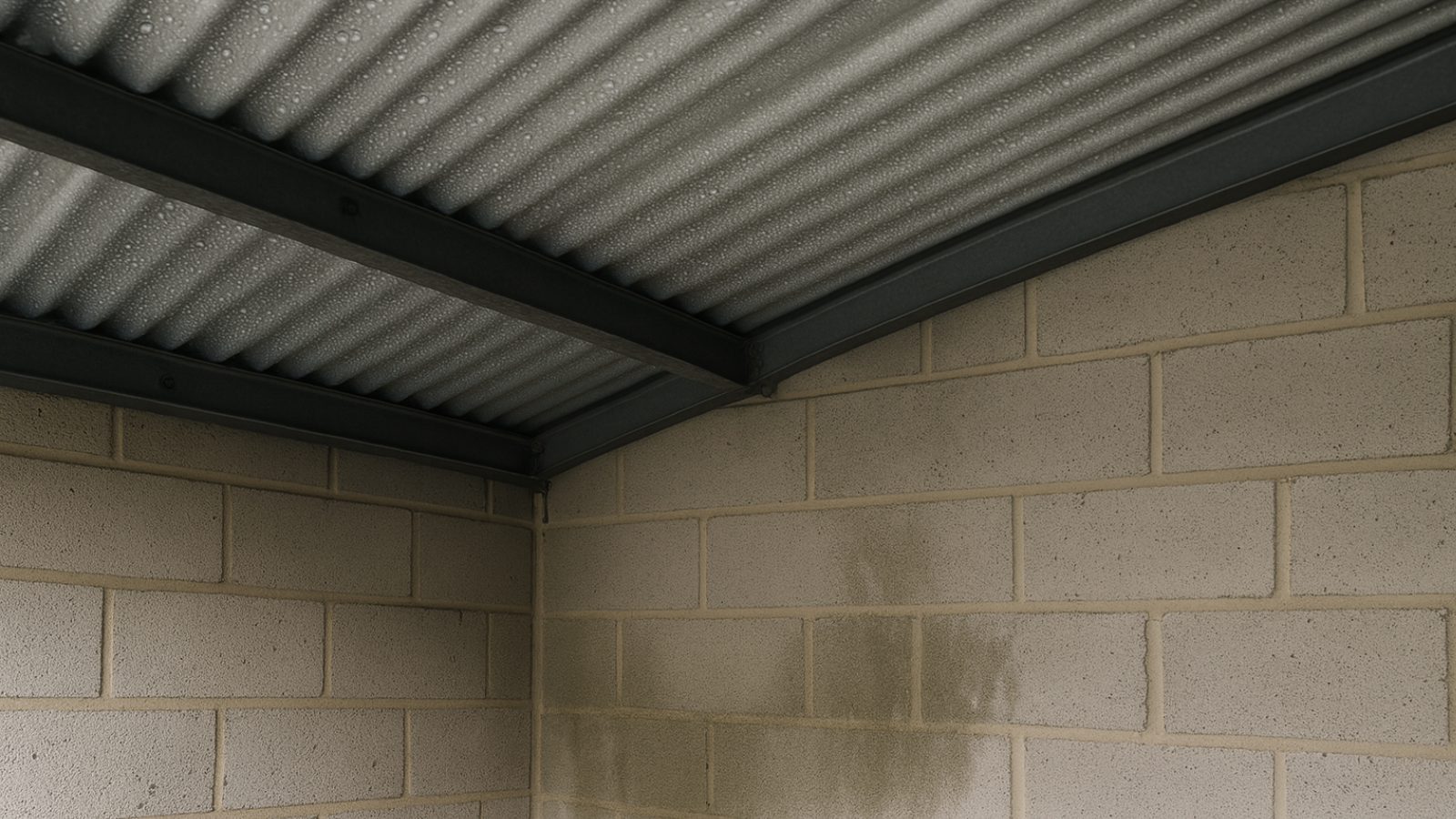
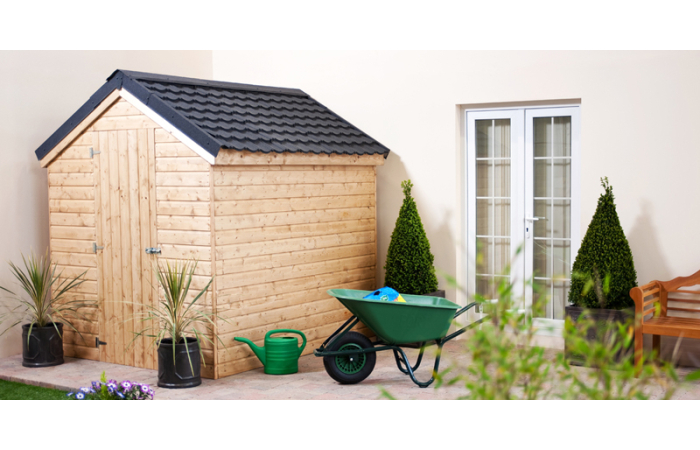
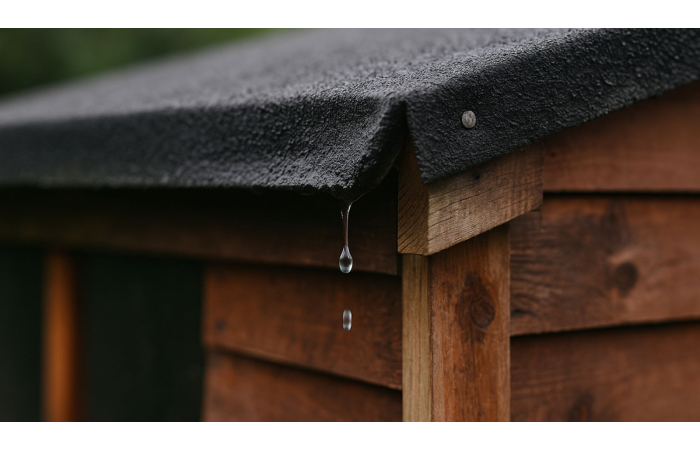
When water starts dripping inside a garage, the first assumption is usually that there’s a leak. But more often than not, it’s actually condensation - a common problem in cold, damp weather, and one that affects sheds in much the same way.
Garage roof condensation generally happens when warm, moist air rises and meets the underside of a cold roof surface - typically bare, uninsulated metal (but this isn't the only offender). If left unchecked, those harmless-looking beads of water can lead to persistent dripping, rust, mould and ultimately long-term damage to whatever’s stored inside.
Keep reading to work out how to quickly identify the main issue, which roofing materials are most susceptible and the most practical steps that will stop or reduce condensation.
In this article
If the water appears across the whole underside of the roof, or beads form evenly on the surface - it’s condensation.
If it’s coming from one area - like around a fixing, along a seam or where the roof joins the wall - it’s more likely to be a leak. Check our quick DIY fixes for garage roof leaks guide here for more on how to check and make sure.
If nothing looks damaged from outside, but it’s still dripping inside, condensation is the cause.
Condensation risk depends on how cold the roof surface gets and how well the garage can breathe.
|
Roof Type |
Condensation Risk |
Why |
|
Bare metal sheets (no backing/insulation) |
Very high |
Metal cools quickly at night and if there's no insulation, moisture instantly forms on the underside. |
|
High |
Slightly better than metal, but still thin and uninsulated. |
|
|
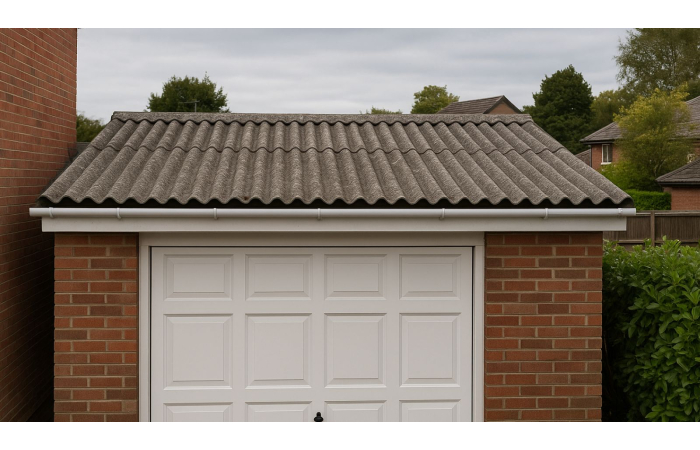
Fibre cement sheets |
Moderate |
More stable temperature and slightly breathable, can still trap moisture if airflow is poor. |
|
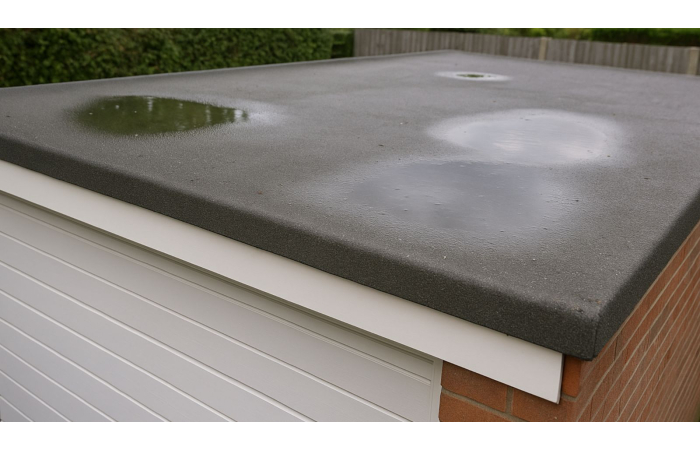
Flat rubber (EPDM) |
Low–moderate |
Outer surface should be watertight if installed correctly, but warm air can still condense underneath if the space is sealed. |
|
GRP or felt flat roof |
Low |
Problems usually come from trapped indoor moisture, not the roof surface itself. |
Here’s how to go about it.
Step 1 - let the warm air out
-
After parking a warm car, open the garage door or window for 10–15 minutes to let the moisture out.
-
Don’t store wet items like damp coats or muddy tools inside – they can add a lot of moisture overnight.
-
Minimise clutter near the walls and roof so air can circulate freely.
These basic steps alone can often reduce condensation in mild cases – but make sure to check step 2 as well as this is usually the most important.
Step 2 - improve airflow through ventilation, inside the garage
If the roof is dripping regularly, the main thing to check is how well the garage can breathe.
Doing step 1 alone won’t be enough to help if you don’t have some ongoing basic ventilation.
Aren’t most garages already ventilated?
You’d think so but many garages built before the 1990s were constructed with minimal or no designed ventilation. And some newer garages (especially those attached to homes or upgraded for thermal performance) have been sealed more tightly under energy efficiency regulations
So the first practical step is to check exactly what ventilation your garage has and whether it’s working:
-
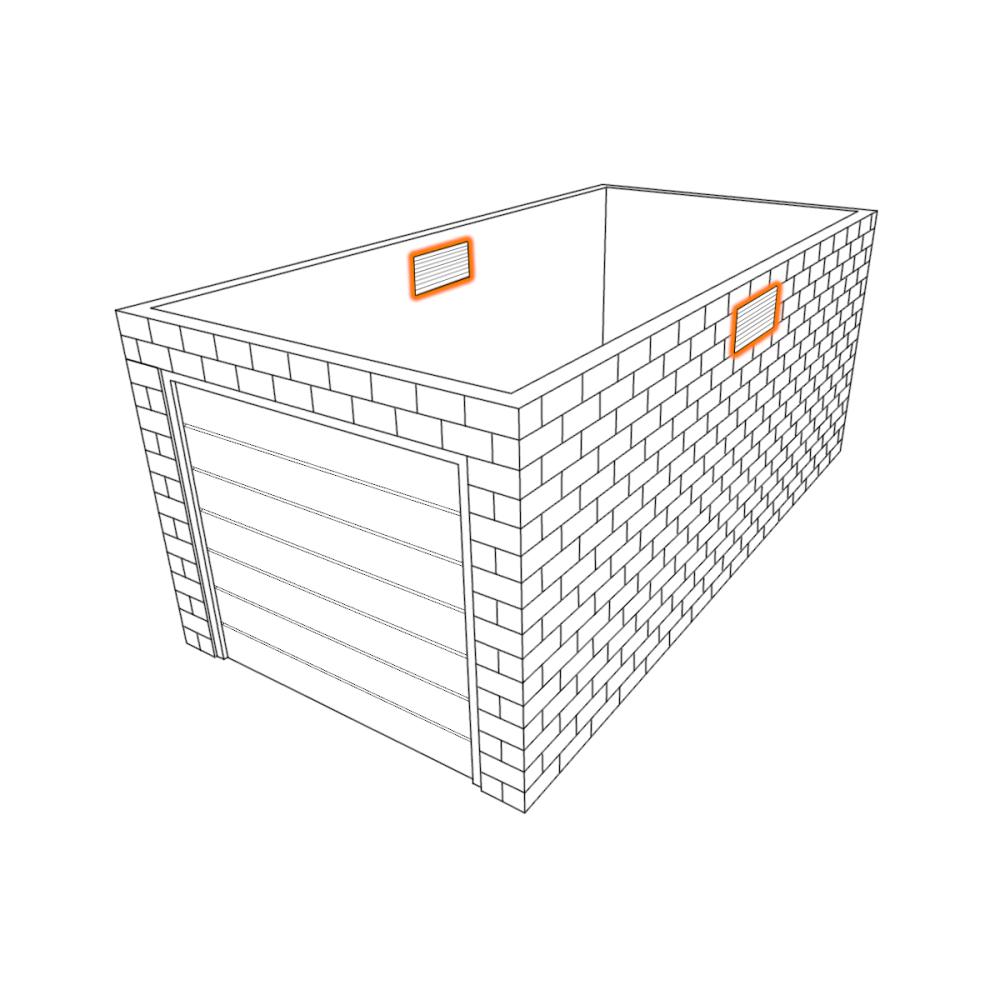
Look for small grilles or louvres high up on the side walls
-
Check for gaps under the roof eaves (where the roof overhangs the wall)
If you can’t find any vents, or everything’s sealed tight, it’s trapping the moisture and causing the dripping.
To improve ventilation and airflow:
-
In both pitched and flat roofs, fit a simple vent into a side wall or gable end - like a plastic air brick or louvred wall grille that allows constant passive airflow. These can usually be installed fairly easily in both timber and brick walls and ideally you'll get two vents across from each other, but one is better than none if that isn't possible.
-
If you have a flat-roofed garage with a fitted ceiling - you can also add a small vent cover in the ceiling or wall to allow air movement into the roof void. This helps prevent moisture getting trapped above the ceiling where you can’t see it.
-
You don’t need mechanical fans - just a small, high-level vent can make a big difference if the garage is currently sealed up.
If you already have ventilation and the roof is still dripping:
-
Check that vents aren’t blocked or covered (inside or out) - things like cobwebs, paint or stored items can all stop them working.
-
Ideally, vents should have been installed on opposite walls to allow air to flow right through the garage - for example, front and back or both side walls. If they haven’t, look to add an additional one. If your garage is attached or this isn’t possible for whatever reason, having at least one, clear working vent should still help.
You can learn more about how to ventilate your garage here.
If the garage is well ventilated and the airflow is clear but condensation still forms, the issue may be the roof surface itself cooling too quickly, especially on bare metal sheets or bitumen roofs...
Step 3 – if ventilation hasn’t solved it, the roof may need upgrading
At this point, the most reliable solution will usually be to replace the roofing with something that prevents condensation more effectively.
Here’s what to consider based on your current garage roof type:
If you currently have bare (single-skin) metal sheets:
-
Switch to fleece-backed metal sheets (anti-condensation coated)
These absorb moisture on the underside and release it gradually as the roof warms. They look and install like standard metal sheets but help to prevent dripping.
-
Or upgrade to insulated metal roof panels
These include a built-in layer of rigid insulation, so the inside surface doesn’t get cold enough to cause condensation at all.
If you have corrugated bitumen sheets:
-
Consider switching to fibre cement
Fibre cement sheets are more thermally stable and breathable than bitumen. It won’t sweat like bitumen or metal and is often used on garages and outbuildings to prevent condensation.
If you have fibre cement sheets and still see moisture:
-
Check airflow before replacing - fibre cement is already low-risk for condensation.
-
Only consider re-roofing if the sheets are old, cracked or covered over in a way that traps moisture.
If you have a flat roof (rubber, GRP, or felt):
-
Flat roofs don’t usually cause condensation on their own - the outer surface stays sealed and doesn’t sweat like metal.
-
But, as briefly mentioned above, if your garage has a ceiling fitted underneath the roof, moisture can get trapped between the ceiling and roof deck - especially if there’s insulation up there and no ventilation. It’s not always clear how it was built or sealed.
Where to next?
Upgrading your roof material is only necessary when ventilation and moisture reduction have already failed and the current roof type is clearly unsuitable for the way the garage is being used.
If you’re seeing regular dripping and rust, or using the garage year-round, re-roofing with the right material can solve the issue permanently.
And, even if you’re thinking about re-roofing your garage yourself (not always the most straightforward or realistic DIY job!), you might still want to consult a professional to check the best solution for your specific setup to make sure this problem doesn’t come up again.
Explore more ideas or shop replacement garage roofing below.