A Guide to Choosing Polycarbonate Roofing: Types, Specs & Performance
Polycarbonate is very popular as a roofing material for lots of reasons. It's a tough thermoplastic with enough flexibility to absorb impact without cracking, even in colder weather - which is why it usually outperforms materials like PVC, acrylic and glass at similar thicknesses. It's also easy to handle, cut and - when installed correctly - it won't discolour and can last for many, many years.
But, there are a lot of choices of sheet type, profiles, colours and thicknesses and it's not always clear where to start.
Whether you’re a landscaper tasked with adding a roof to a pergola or a DIYer thinking of putting up a carport, this guide will help you understand the main pros and cons of all the different types of polycarbonate roofing plus what accessories you need for installation and how poly stacks up against other materials you might be considering.
In this article
Quick overviews of the 3 main types of polycarbonate roof sheet:
The "polycarbonate roofing system" and accessories you need for installation
There are 3 main polycarbonate roof sheet types - corrugated, multiwall and solid. Which one suits best depends on the roofing job - each offers a different balance of strength, stiffness, clarity and insulation.
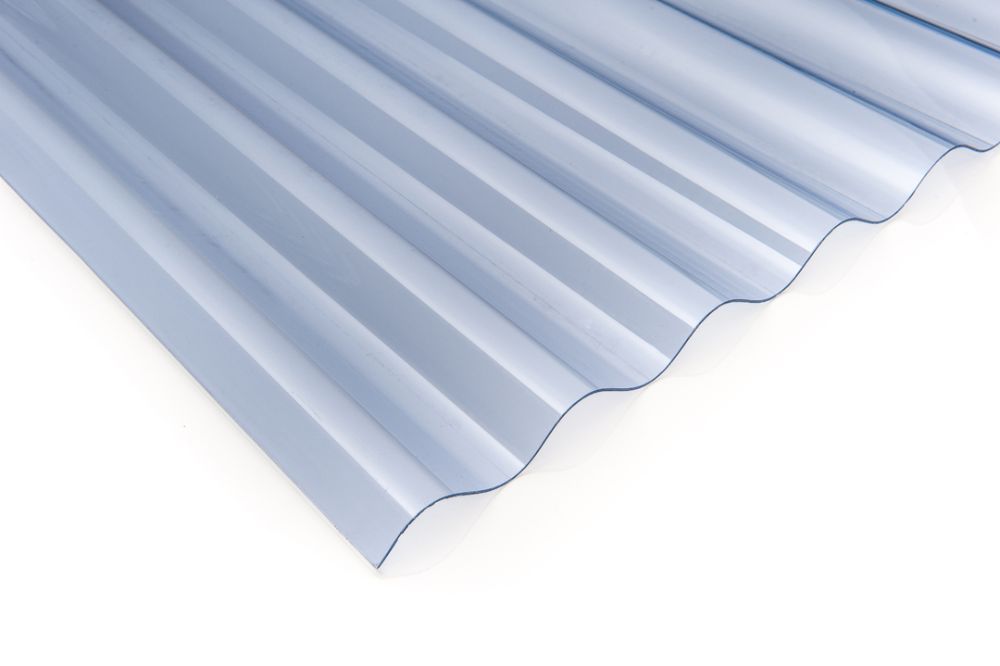
- They have very good light transmission
- Lightest option of the 3 types discussed in this article.
- No insulation benefits (single skin = no thermal barrier).
These sheets are rigid along the corrugations and more flexible across them - they rely heavily on correct support spacing to avoid flex under heat.
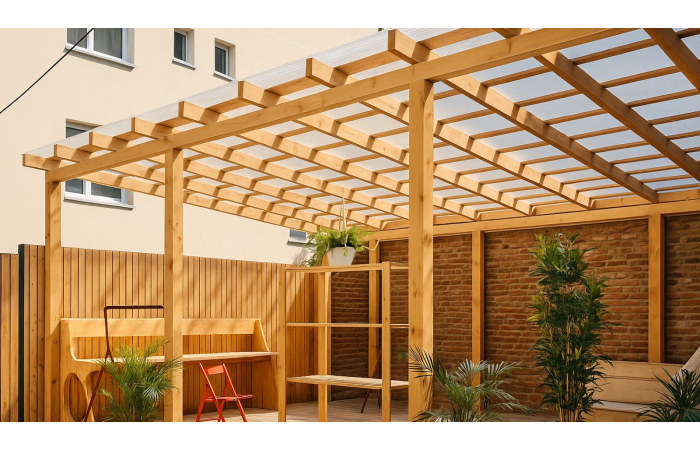
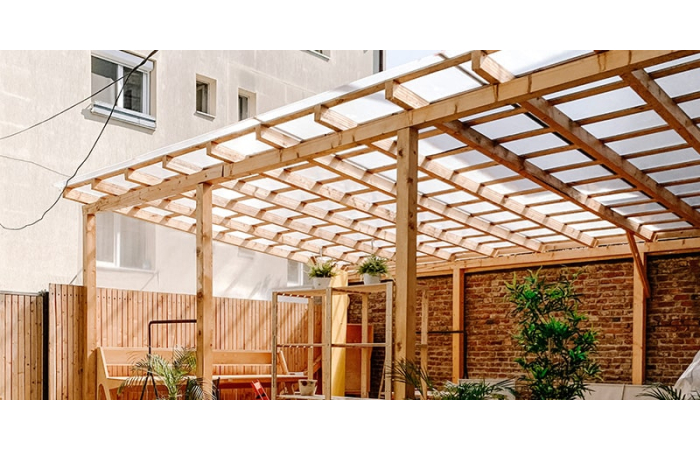
Most commonly used: on simple, open structures such as pergolas, carports, basic lean-tos and garden storage where a light weight and brightness matter the most.
2. Multiwall polycarbonate
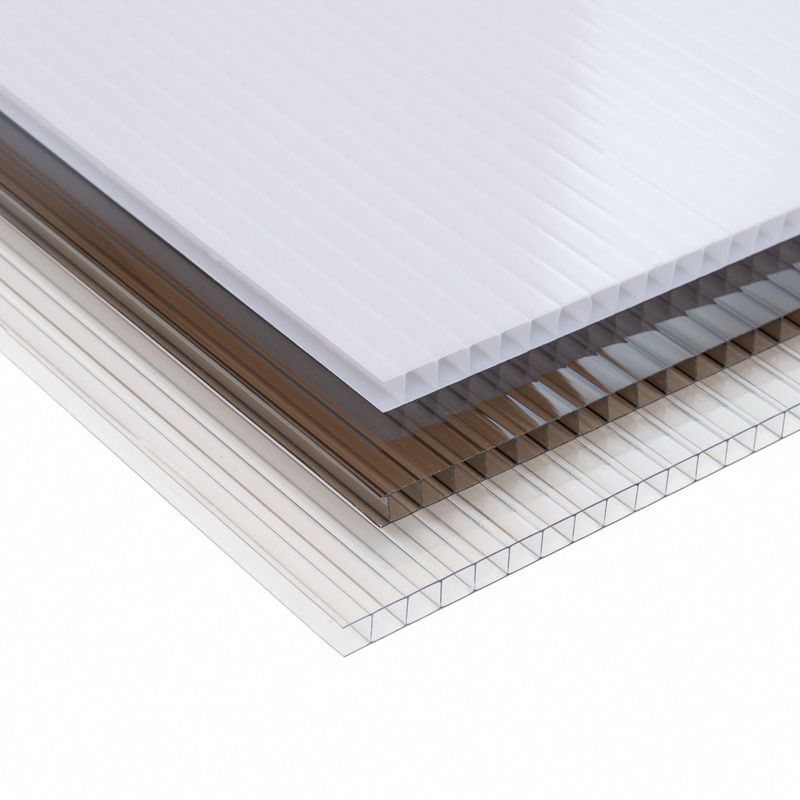
Multiwall sheets are built from multiple layers with internal chambers:
- Offers better thermal performance than single skin sheets.
- Handles impact well across the sheet, in any direction.
- Diffuses light rather than providing clear visibility
- Stiffer than single-skin corrugated sheets at similar weights.
The chamber layout varies by product - twin-wall, triple-wall and higher-wall options like 5- or 7-wall all exist.
Thinner twin-wall polycarbonate sheets work well on smaller roofs, while 16 mm or higher-wall versions stay steadier across larger spans and may slightly reduce heat loss on enclosed spaces.
Because the chambers are open at the ends, they need proper sealing to keep moisture and dirt out (more details on how to do that further below).
Most commonly used: for lean-tos, garden rooms and part-enclosed spaces where you want softer light and some insulation without adding weight.
3. Solid polycarbonate
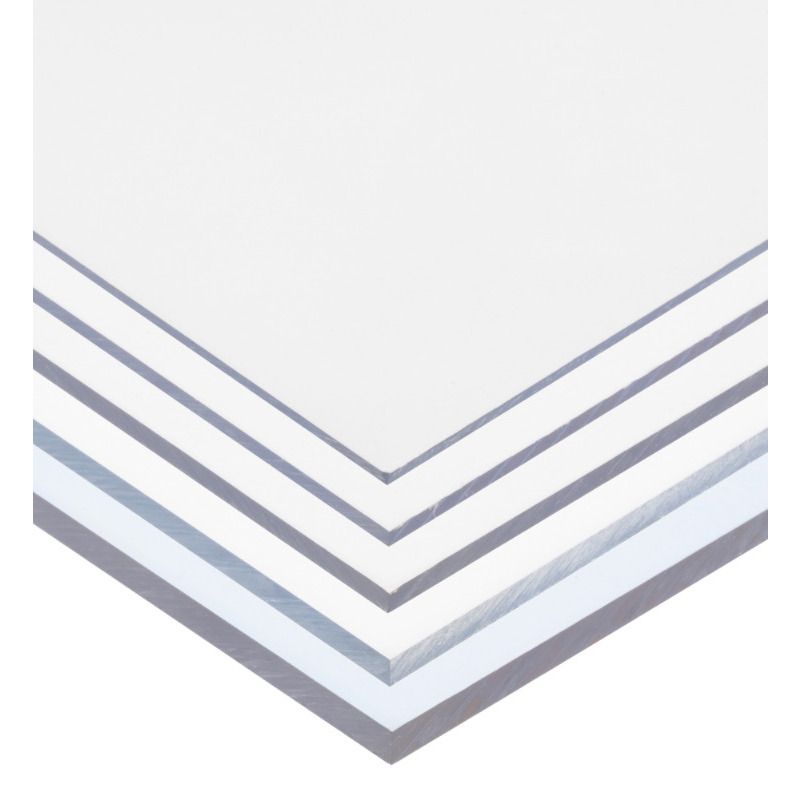
Solid sheets are flat, glass-like panels with no internal chambers.
- Clearest finish of all polycarbonate types
- Very high impact resistance
- The smooth surface can mark or scratch more easily than corrugated or multiwall if it’s not cleaned carefully.
- Heavier than single-skin corrugated or thin multiwall but still far lighter than glass and because there’s no chamber depth to stiffen the sheet, they usually need closer support spacing to stay steady on wider runs.
Most commonly used: on open canopies and small covers with rigid frames where a cleaner, glass-like look is more important than insulation.
Once you know the sheet type, the next thing that affects performance is the specification. A few details make a meaningful difference.
1. Thickness
Thickness affects how far a sheet can span, how much it moves in warm weather and how comfortable the space beneath it feels.
- Multiwall sheets are usually 10mm, 16mm or 25mm. In general, 10mm is fine for smaller roofs with short spans, 16mm stays far steadier on larger lean-tos or warmer aspects and 25mm is used when you need noticeably better insulation or the roof carries longer runs without feeling flexible. 4mm and 6mm multiwall polycarbonate exist, but they’re best suited to things like smallish greenhouses. 10mm+ thickness is often the best starting point for polycarbonate roofs.
- Solid sheets are usually 4-6 mm on small roofs. At 4 mm the sheet is light, easy to handle and works well on short spans. At 6 mm it feels firmer, carries wider centres with less flex, and gives a more “glass-like” finish without the weight of real glass. Thinner 2-3 mm sheets also exist but are mainly for glazing or hobby uses, not roofing.
- Corrugated sheets are single-skin and typically around 0.8mm-1.2mm thick - the profile is doing most of the structural work. Thinner sheets flex more across the profile, especially on warm days or wider centres. A slightly thicker corrugated sheet feels steadier under wind load and holds its shape better on longer runs, but it won’t add insulation.
As a rule: choose the thinnest sheet that comfortably matches the span, temperature and use of the space - anything too thin will flex and anything too thick adds cost without any real benefit. For a deeper dive on polycarbonate sheet thicknesses, see our guide here.
2. Sheet sizes and cover widths
Polycarbonate roof sheets are usually manufactured in a small set of standard lengths, typically from about 2m up to around 6–7m in a single piece, so you choose the length that best matches your rafters or frame and then cut to suit.
Multiwall and solid sheets come in fixed panel widths, often running up to roughly 2.1m wide depending on the range; and the glazing bars then set the centres on the roof.
For corrugated sheets, their cover width is dictated by the profile and side lap, so you’ll plan your sheet count and timber centres around that profile rather than a flat width.
All of these polycarbonate sheets can be cut to size fairly easily (you can also often get them pre-cut before delivery), but the longer and wider the panel, the more attention you need to give support spacing so the roof doesn’t start to move around in warm weather.
3. Light levels and colour finishes
Clear, opal and bronze are the most common finishes though multiwall variants often come with the most choices:
-
Clear gives maximum brightness and visibility.
-
Opal softens the light and helps manage heat on enclosed areas.
-
Bronze reduces glare on bright aspects.
Multiwall naturally diffuses the light, while solid sheets stay closest to a true clear finish.
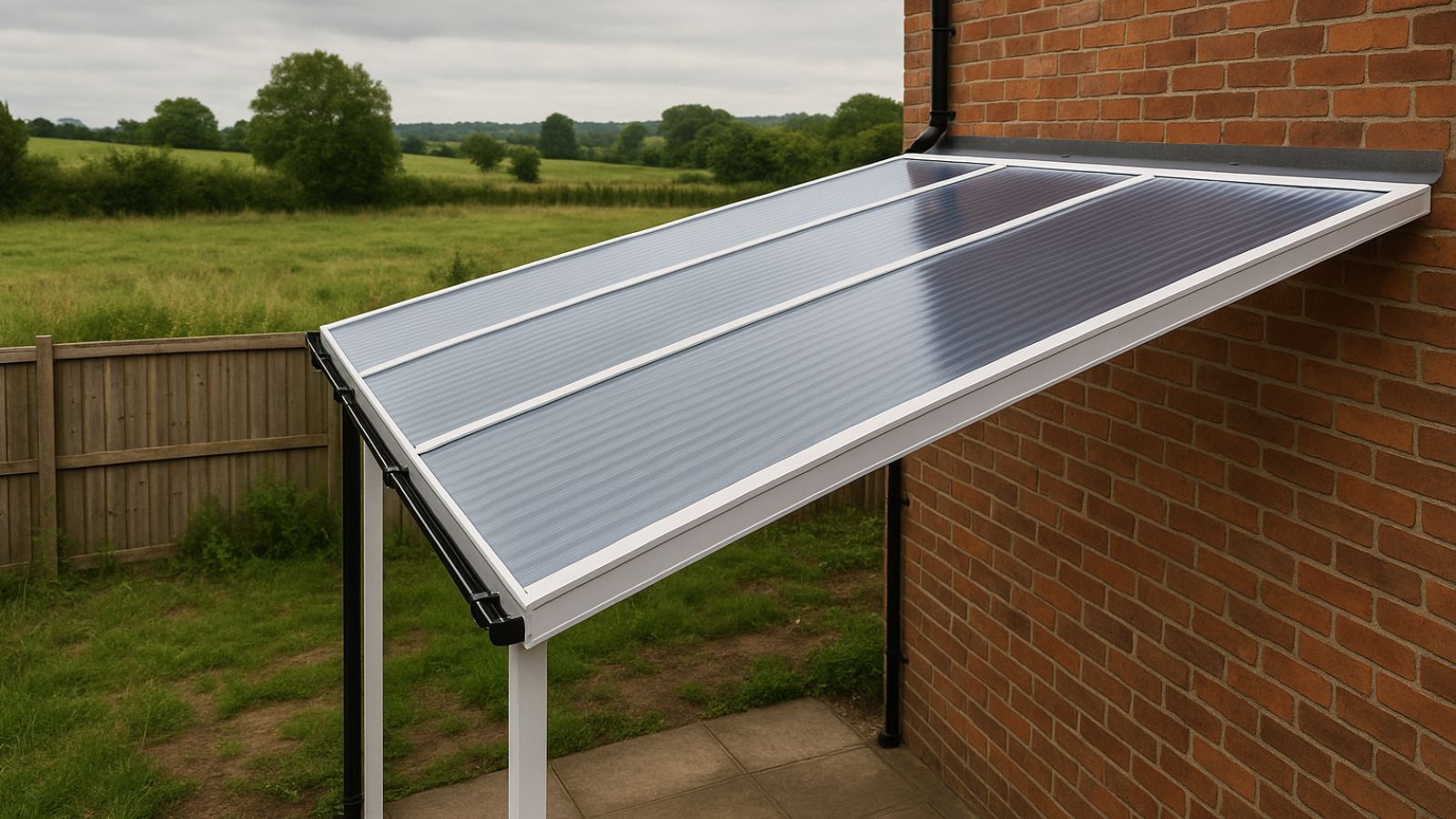
Clear corrugated polycarbonate often shows a faint blue tint. It happens because the profile bends light differently across the sheet and the UV-protective layer has a slight cool tone on single-skin products. In photos the sheets look neutral because they’re lit evenly, but on a roof the tint is little more noticeable, especially against timber framing or darker backgrounds. Keep this in mind, especially if you’re recommending a product for a client - it's also the same for other corrugated sheets like PVC.
4. UV protection
Roof-grade polycarbonate has a UV-protected face that must sit outward.
Only one face is treated because the coating needs to be exposed to work effectively and the sheet usually arrives with film or printing that shows which side that is.
Fitting it the wrong way round is a common reason older roofs yellow or become brittle.
5. Impact and weather resistance
All polycarbonate sheets handle impact well, even in cold weather when other plastics can turn brittle.
Solid sheets take the heaviest knocks, but multiwall and corrugated generally still offer better impact resistance than PVC or acrylic in typical roofing use.
The main differences show up in heat and wind: single-skin sheets move more on hot days, while multiwall stays steadier because of its depth.
In most cases the sheet isn’t the weak point - it’s the framing or fixings. As long as the sheet type matches the span and support spacing, polycarbonate stands up well to typical UK weather.
6. Thermal performance
Only multiwall sheets can offer any meaningful insulation.
The chambers slow heat transfer, which makes a noticeable difference on enclosed lean-tos, garden rooms and utility spaces.
Corrugated and solid sheets are single-skin, so they don’t insulate at all - they simply keep the weather out while letting in maximum light.
If the space underneath is enclosed or regularly used, multiwall is usually the safer choice for managing temperature.
The “polycarbonate roof system” and what extras you need to install polycarbonate roof sheets
Polycarbonate sheets fix in two different ways.
Corrugated polycarbonate sheets are fixed through the sheet itself, using the same basic approach as other corrugated roofing sheets.
Multiwall and solid polycarbonate sheets don't fix through the sheet and use a different set of accessories to install.
This is what people usually mean by a “polycarbonate roof system” - the (non-corrugated) sheet and the matching accessories designed to work with it.
Important note: In practice, those accessories are usually brand-specific - the accessory types/names will be the same (like glazing bars), but the items you choose need to match the same brand as the roof sheet you buy. Mixing brands is one of the easiest mistakes to make when buying polycarbonate for roofing.
The essential parts
If you’re fitting multiwall or solid polycarbonate sheets, the essential parts are usually:
- Glazing bars - these are the main parts that hold the roof together. They run between the sheets, support the sheet edges and keep everything aligned and weather-sealed.
- Rafter-supported glazing bars fix onto a timber or metal support underneath.
- Self-supporting glazing bars are stronger and designed to span between the main supports themselves – but they’re also more expensive.
- Fixings - these secure the glazing bars in place. On rafter-supported bars, that usually means fixing them to the structure underneath. On self-supporting bars, it usually means fixing them at the ends to the main supports. Glazing bars are usually not pre-drilled so you will do this yourself.
- End tape - used on multiwall sheets to seal the open ends of the internal channels. This helps stop dirt, moisture and insects getting inside. You may see two types of tape:
- Sealing tape closes the top end of the sheet fully, because that end needs to be sealed against rain, dirt and insects.
- Breather tape goes on the lower end, where the sheet still needs protection but also needs to let trapped moisture escape from the channels.
Other parts that may also be needed or are optional
Depending on the roof layout and the sheet type, you may also use:
- End caps – these finish the ends of glazing bars neatly and help protect them.
- Edge trims or F profiles – these finish and protect exposed sheet edges where there is no adjoining sheet - typically this would be for something like a lean-to, carport or similar "open" structure.
- H sections – these are a type of joining strip used to connect sheets side by side but they aren’t suitable for most roofing setups. You’d usually only use an H-section for lightweight, vertical joins or temporary indoor screens because they’re cheap and easy to push-fit. Otherwise, glazing bars are the essential joiners for roofs.
- Fixing buttons – these are most often used when you have very wide sheets that need fixing to supports in the middle. They’re not standard on every polycarbonate roof and you still need glazing bars.
- Flashings – these are used where the roof meets a wall or other surface, to help weatherproof that junction.
So remember, when you’re looking to buy polycarbonate sheets these parts usually aren’t interchangeable across different brands and you need to match the fixing and finishing accessories to the right brand of roof sheet chosen.
- PVC sheets are cheaper but weaker, more flexible and more prone to discolouration, so they’re typically used on small, low-demand roofs.
- GRP is sturdier and stable but heavier and has much lower impact resistance - GRP sheets are often used as rooflights.
- Acrylic offers clarity but doesn’t cope well with impact or movement.
- Glass provides a high-end finish but requires much stronger framing and has limited tolerance for impact or flexing.
Polycarbonate sits somewhere between these options: light, durable and available in constructions that suit both open and enclosed lightweight roofs.
Where to next?
Corrugated, multiwall and solid polycarbonate sheets behave differently because of how they’re built.
Once you understand those differences - and the support each one needs - choosing the right sheet becomes much more straightforward.
If you need help choosing the best materials for your project or have any roofing questions at all, don’t hesitate to give our friendly team a call, or drop them an e-mail.
Or keep exploring more guides and products below.